How to Fix Rejected Patent Drawings Fast
Your patent application can be abandoned over a drawing problem you ignored for too long. Not the invention, not the claims, the drawings. That surprises most inventors, and it is exactly why knowing how to fix rejected patent drawings quickly matters more than people think. Get it right and you keep your filing date and your momentum. Get it wrong and you risk months of delay or losing the application entirely.
So let's walk through what a drawing rejection actually means, why it happens, and the exact steps to fix it before the clock runs out.
Here is a distinction that trips up almost everyone. When people say their patent drawings got "rejected," what the USPTO usually issued is a drawing objection, not a claim rejection.
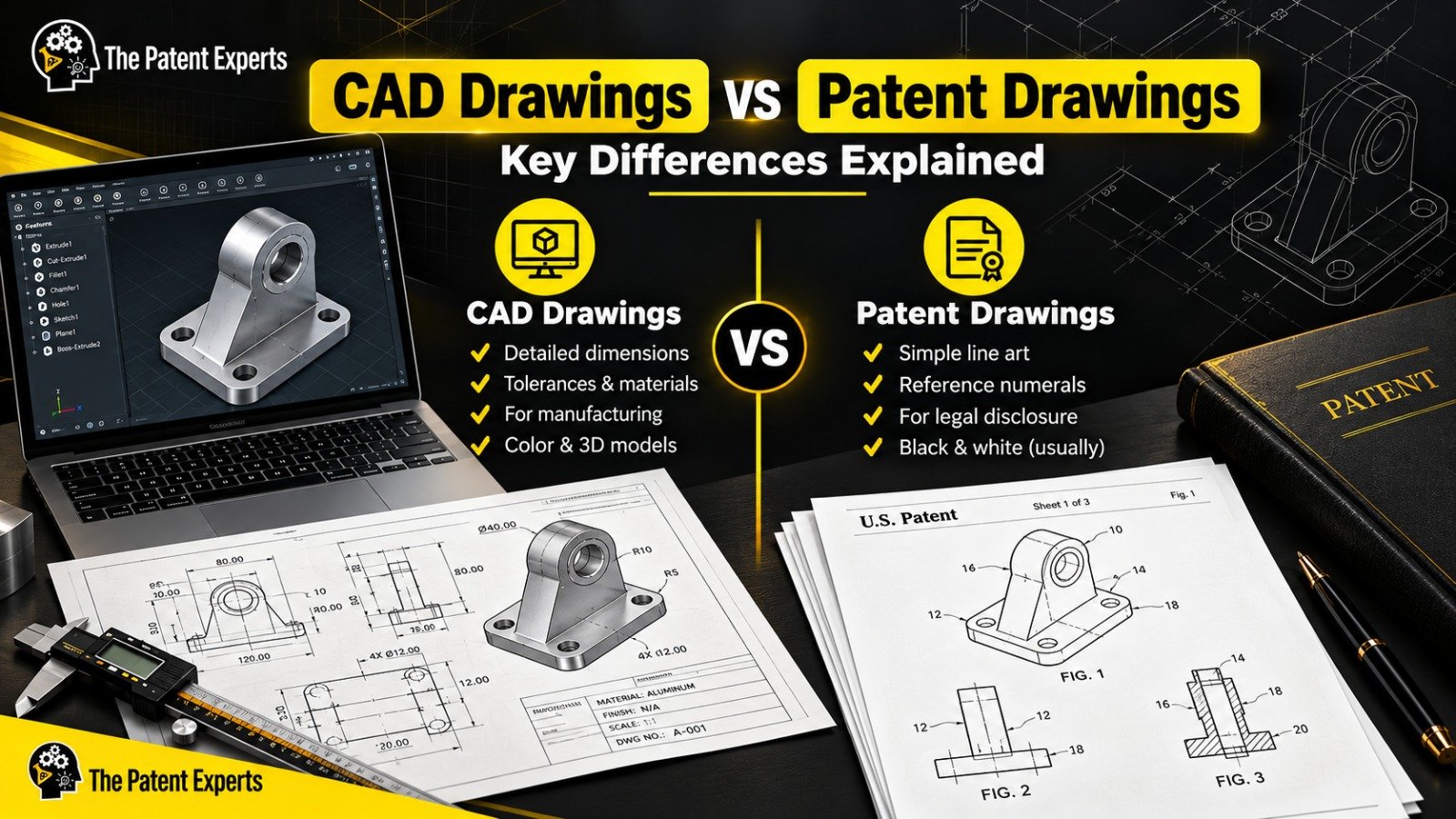
A rejection attacks the substance of your claims under laws like novelty or obviousness. An objection flags a formal problem with how something is presented, and drawings fall under formal rules in 37 CFR 1.84
(https://www.uspto.gov/. The reason this matters is practical. Objected drawings are fixable through corrected sheets, and once you submit compliant ones, the issue clears. Knowing you are dealing with an objection, not a substantive rejection, tells you the path forward is correction, not legal argument.
https://thepatentexperts.com/blog/fix-rejected-patent-drawings-usa
Examiners object to drawings for a handful of recurring reasons. Spotting yours in the office action is your starting point.
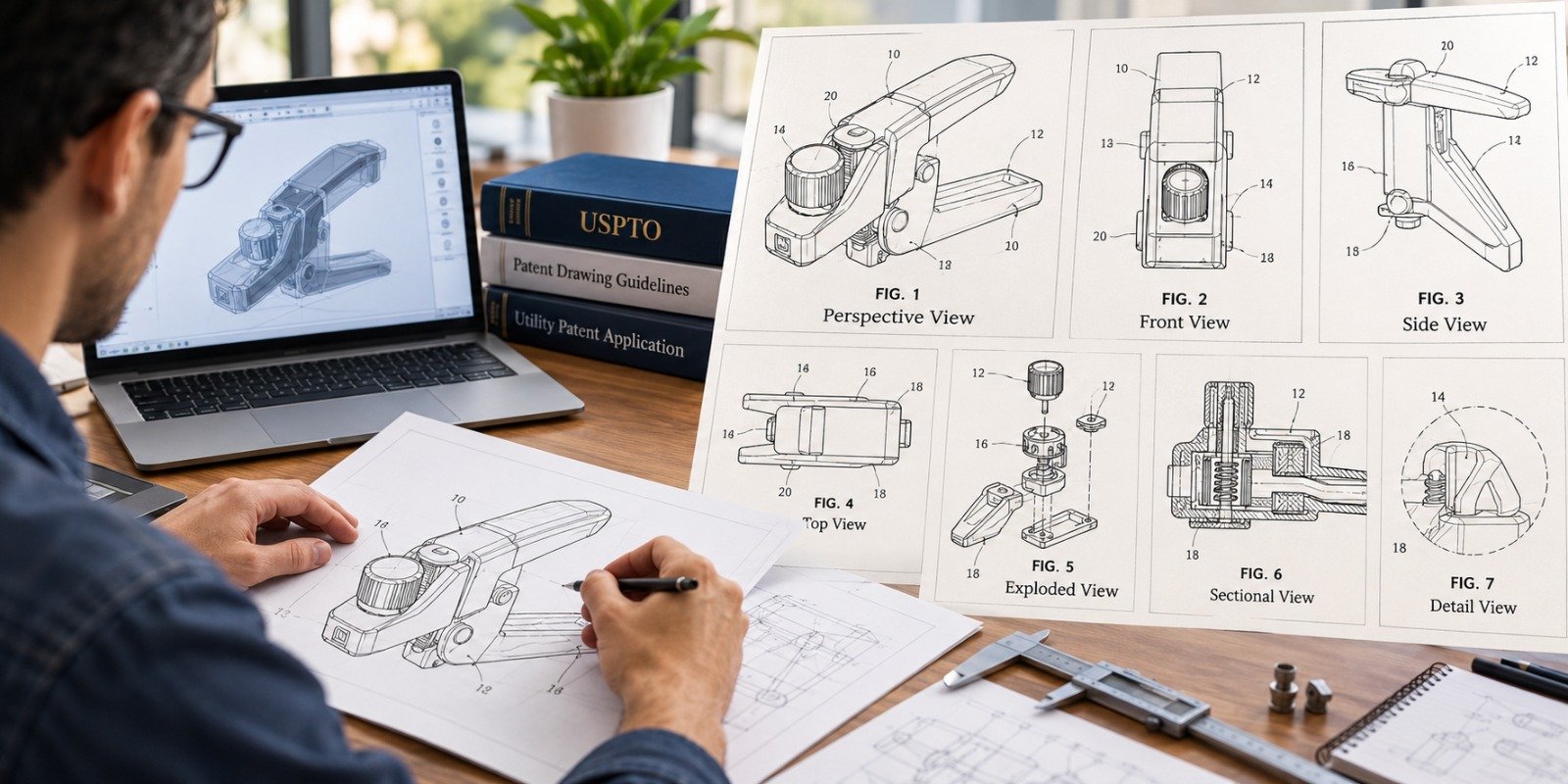
Line quality tops the list. Lines that are too light, blurry, or inconsistent in weight get flagged because they will not reproduce cleanly. Missing or inconsistent views come next, where a feature described in the specification has no matching figure. Reference numerals and leader lines cause trouble when numbers are missing, duplicated, or pointing at the wrong part.
Two issues dominate design patents specifically. Broken lines get misused to show hidden parts or claimed features when they should only show environment or boundaries. USPTO data showed broken-line misuse ranking among the top five reasons for design drawing objections in FY2023. Hatching and shading errors are the other big one. Hatch lines must be thin, uniform, and angled at 45 degrees, and they must never obscure your reference numerals.
https://thepatentexperts.com/blog/understanding-patent-drawings-types-and-requirements
This is the part competitors gloss over, and it is the most important thing on this page. For a utility or plant application, the USPTO will not hold drawing objections in abeyance.
Plain English: you cannot wait until your claims are allowed to deal with the drawings. Corrected drawing sheets are required in reply to the office action, and ignoring them can lead straight to abandonment of your application (https://www.uspto.gov/web/offices/pac/mpep/s608.html) Many inventors assume they can sort out "minor" drawing issues later. For utility filings, that assumption can cost them the whole application. Treat every drawing objection as a hard deadline, usually within the response period set in your office action.
Once you know what you are dealing with, the fix follows a clear sequence. Here is the process professionals use.
Step 1: Read the office action line by line. Identify every drawing issue the examiner raised, not just the obvious one. Missing even a single objection means another round of corrections.
Step 2: Map each objection to a specific fix. Light lines need redrawing at proper weight. A missing view needs a new figure. A misused broken line needs converting or removing. Write down the fix for each.
Step 3: Prepare fully compliant replacement drawings. Every corrected figure must meet 37 CFR 1.84 standards. This is also where the single most dangerous mistake hides, which we will cover next.
Step 4: Label and assemble the sheets correctly. Mark each corrected sheet "Replacement Sheet" in the top margin, and any sheet adding a figure as "New Sheet." A replacement sheet must include every figure that appeared on the prior version of that sheet, even if you changed only one.
Step 5: Write a clear explanation of the changes. In the remarks or drawing amendment section, explain exactly how each correction resolves the examiner's objection. This speeds up review.
Step 6: File before your deadline. Submit the replacement sheets with your response within the set period to keep the application alive.
https://thepatentexperts.com/service/replacement--objected-drawings/4
Knowing how to fix rejected patent drawings is half the battle. Avoiding the traps inside the fix is the other half.
The biggest one is adding new matter. Your replacement drawings must stay faithful to your original disclosure. You cannot add a detail, dimension, or feature that was not already shown or described when you filed, because new matter is prohibited under USPTO amendment rules and will trigger a fresh rejection. Correct what is there. Do not improve the invention on the sheet.
Two more catch people out. The USPTO does not make drawing changes for you, full stop, so do not request it or submit marked-up red-ink "proposed corrections," since that older practice was eliminated and such submissions are treated as non-compliant. And do not send a partial sheet. Every figure on the original sheet has to reappear on the replacement, or the office bounces it.
Plenty of inventors attempt corrections themselves, and for a single light-line fix, that can work. The risk is a second objection. Each failed correction burns another response cycle, and repeated rounds delay your patent and can rack up extra office costs.
Professional patent illustrators fix every objection in one pass, in the exact format the USPTO expects, with the no-new-matter rule respected. Pricing for replacement drawings is usually modest and quoted per sheet or per figure, far less than the cost of a delayed or abandoned application. Because turnaround and pricing depend on how many figures and what type of corrections you need, the fastest way to get an accurate number is to call The Patent Experts for a current quote on your specific office action.
A drawing objection feels small next to the invention itself, but for utility filings it carries a real abandonment risk if you let the deadline slip. Read the office action carefully, fix every issue with compliant replacement drawings, add nothing new, label the sheets right, and file on time. That sequence clears most objections in a single round.
If you want it handled correctly and fast, send your office action to The Patent Experts. Our team prepares USPTO-compliant replacement drawings that resolve objections in one pass, so your application keeps moving. Contact us today for a quick review and a current quote, and let's get your patent back on track.
[https://thepatentexperts.com/contact]
Usually it means the USPTO issued a drawing objection, a formal problem with how the drawings comply with 37 CFR 1.84, rather than a substantive rejection of your claims. You fix it by submitting compliant replacement drawings.
Read the office action, identify every objection, prepare corrected replacement sheets that meet USPTO standards without adding new matter, label them correctly, explain the changes, and file before your response deadline.
Replacement drawings are corrected drawing sheets that replace the objected ones. Each must be labeled "Replacement Sheet" and include all figures from the prior version of that sheet, even if only one figure changed.
No. For utility and plant applications, drawing objections are not held in abeyance. Failing to correct them in your reply can lead to abandonment of the application.
Q5: Will the USPTO fix my drawings for me?
No. The USPTO does not make drawing changes. Correcting the drawings is the applicant's responsibility, and submitting red-ink proposed corrections is no longer accepted.
No. Replacement drawings cannot add new matter beyond your original disclosure. Adding a feature or detail not originally shown will trigger a new objection or rejection.
Poor line quality, missing views, and incorrect reference numerals are frequent. In design patents, misuse of broken lines and improper hatching are leading causes.
Pricing is typically quoted per sheet or per figure and depends on the corrections needed. Contact The Patent Experts with your office action for a current, accurate quote.

At “The Patent Experts” our team specialises in turning complex concept and ideas into exact complaint patent drawings that meet the stringent guidelines of USPTO, EPO, WIPO among other major patent offices around the globe. With over 5+ years of experience, our team of skilled illustrators are efficient in producing high quality utility designs and trademark patent drawings. By combining cutting-edge technology with a deep understanding of global patent regulations, we ensure every drawing we create is ready for seamless submission and approval.
Quicks Links
Get in touch
Our phone number
Our email address
© 2026 The Patent Expert's All Rights Reserve
Made with ♥ by Website99