Mechanical Patent Drawings USA: Everything You Need to Know
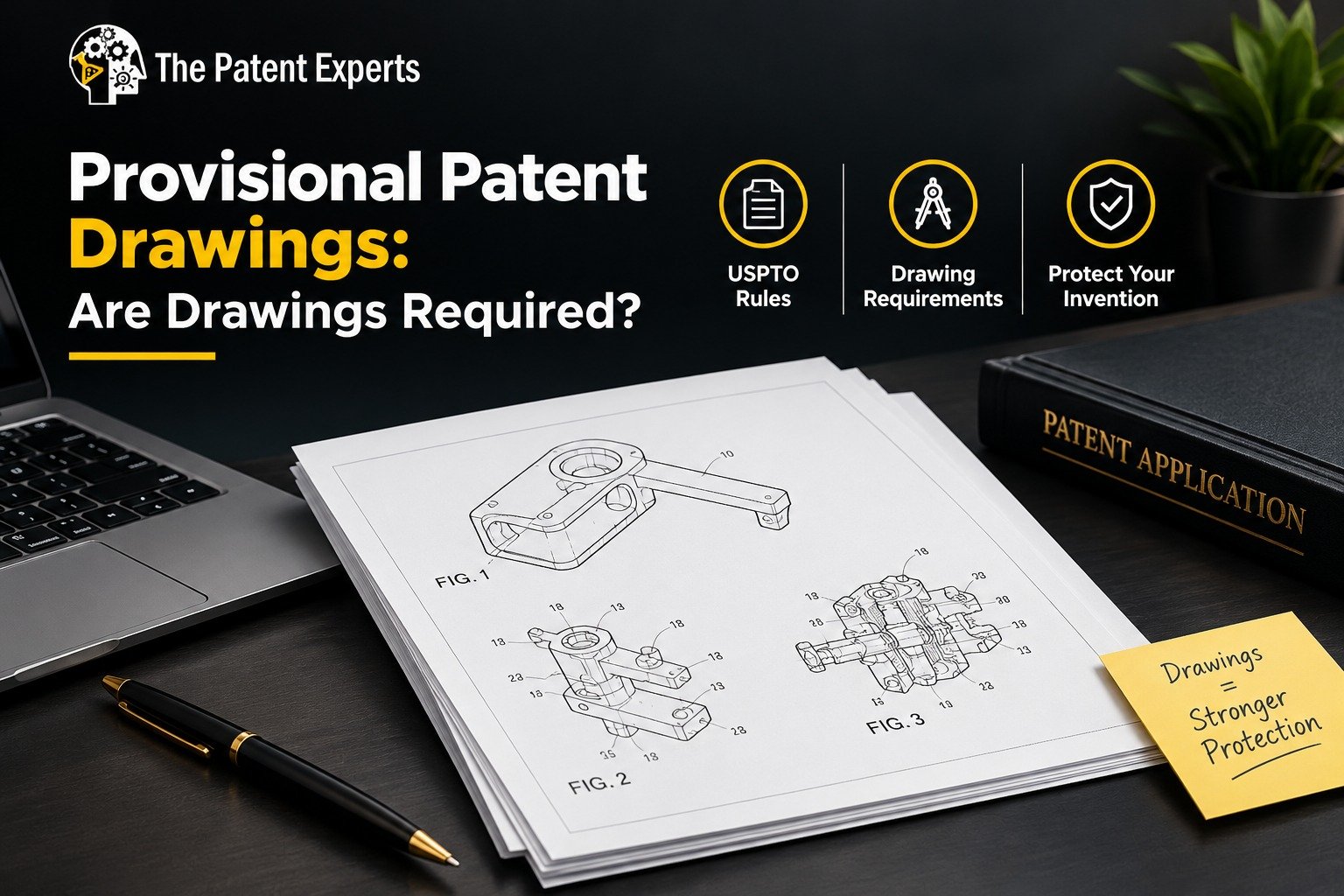
Mechanical patent drawings are one of the crucial elements of any effective patent application. No matter whether you have developed new machinery, industrial equipment, automobile part, consumer good, or production process, professional patent drawings will help patent examiners understand the design of your invention better.
In order to be considered valid by US Patent and Trademark Office (USPTO), mechanical patent drawings should follow the USPTO drawing specifications. Even small inconsistencies like lack of some views, wrong numbering, or bad lines may lead to office actions or demands to submit revised drawings.
In this article, we provide all the information on Mechanical Patent Drawings in the USA: from USPTO drawing specifications to common mistakes and their costs. We also share tips on best practices of creating professional mechanical patent drawings and the benefits of hiring skilled patent illustrators.
Patent drawings of mechanical invention are illustrations which provide information about its structure, elements and working principles. Patent drawings are a vital element in a utility patent application because they help patent examiners understand the function of the invention, its components and features. If the invention includes some mechanical device, machinery, industrial equipment, automotive parts, manufacturing equipment, or some product for consumers, patent drawings will add clarity to the patent application and to the description provided in the patent specification.
According to the USPTO regulations, all patent drawings in the United States have to meet certain criteria regarding their format and technical information. It is required to illustrate all the features mentioned in the patent claims, thus minimizing the confusion and making the work of patent examiners easier.
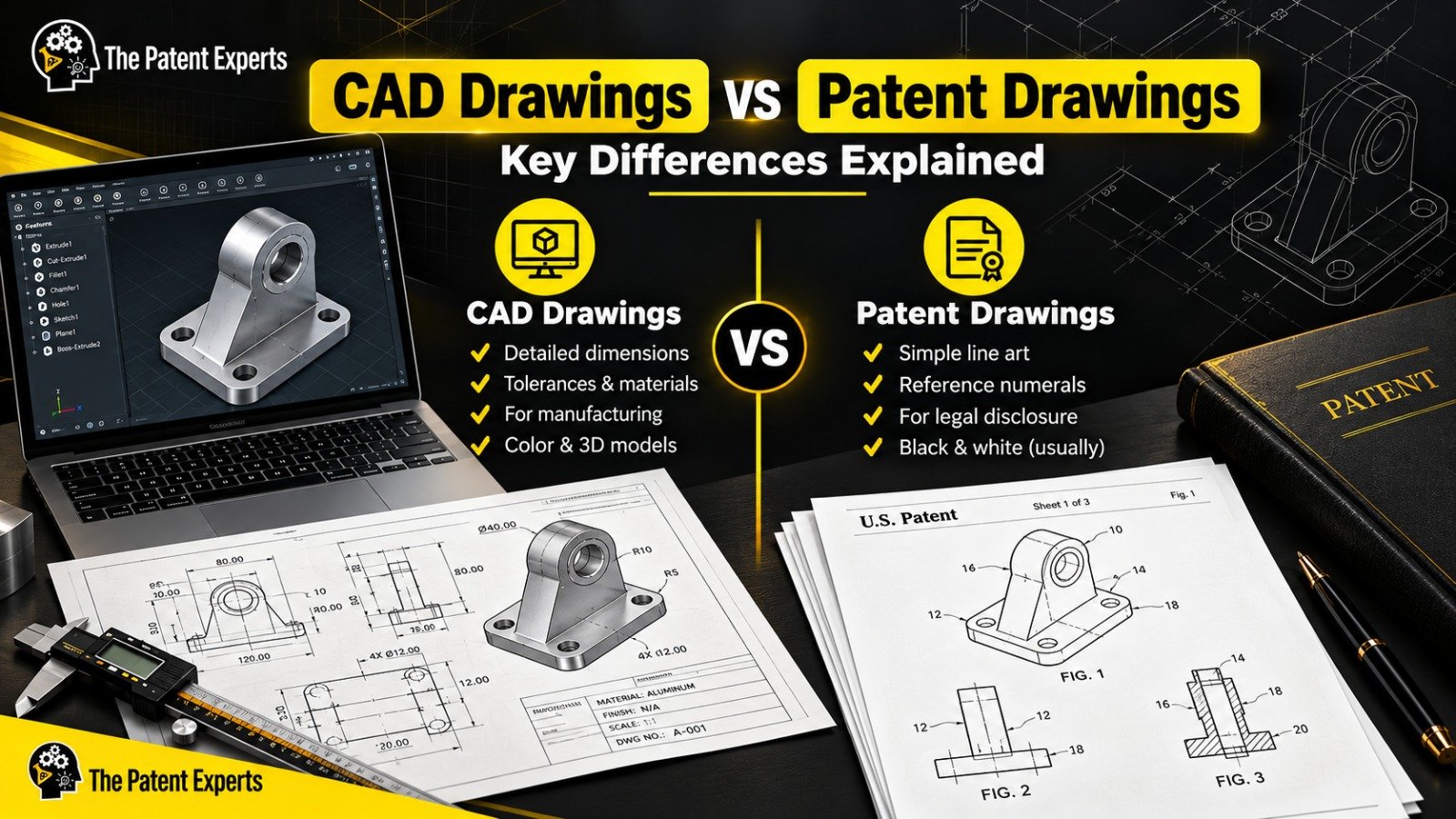
In fact, mechanical patent drawings are not simply engineering drawings. They have to be technically correct and fully compliant with the USPTO drawing requirements.
The importance of mechanical patent drawings extends beyond their role as technical illustration. Professional drawings not only facilitate better understanding of your invention but are an integral part of your patent application. Accurate and compliant with the rules of the USPTO drawings will help you avoid drawing objections and submit high-quality patent applications.
Most mechanical patents contain many different components and complex assemblies with moving parts. A detailed patent drawing is an excellent way to describe the structure and function of your invention for a USPTO patent examiner.
Good patent drawings go hand-in-hand with your patent specification, illustrating visually all the elements discussed in your patent application. They will help you better describe your invention, avoid misunderstandings and make sure that everything needed is reflected in your application.
Improper drawings can lead to various objections, requests for corrections and office actions. Professional and accurate drawings following USPTO requirements can help you avoid additional office actions and related delays.
All mechanical drawings in patent applications that are filed in the United States must adhere to the rules established by the USPTO regarding patent drawings. The specific rules for patent drawings are set forth in 37 CFR § 1.84, and failure to follow these rules will result in drawing objections, office actions, and/or requests for corrections to drawings.
The following are some of the requirements that must be adhered to in order to prepare a patent drawing that complies with USPTO regulations:
By complying with the USPTO regulations when preparing mechanical drawings, you can improve the quality of your patent application and prevent any potential drawing-related objections at the patent examination stage.
| Requirement | USPTO Standard |
|---|---|
| Paper Size | 8.5 × 11 inches (21.6 × 27.9 cm) or A4 (where permitted) |
| Drawing Color | Black ink on a white background. Color drawings are accepted only in limited circumstances with USPTO approval. |
| Margins | Top: 1 inch (2.5 cm), Left: 1 inch (2.5 cm), Right: 0.25 inch (0.6 cm), Bottom: 0.25 inch (0.6 cm) |
| Line Quality | Solid, clean, uniformly thick lines without smudges or unnecessary shading. |
| Reference Numerals | All components must be identified with clear, readable reference numerals that correspond to the patent specification. |
| Figure Numbering | Drawing sheets and figure numbers must be numbered consecutively throughout the application. |
| Labels & Views | Labels, callouts, and drawing views must accurately match the written description and patent claims. |
Failure to comply with these USPTO guidelines could lead to objections and delays in the examination of your patent application. Consulting with professional patent drafters will help you prepare your mechanical patent drawings and make sure that they satisfy all of the required requirements.
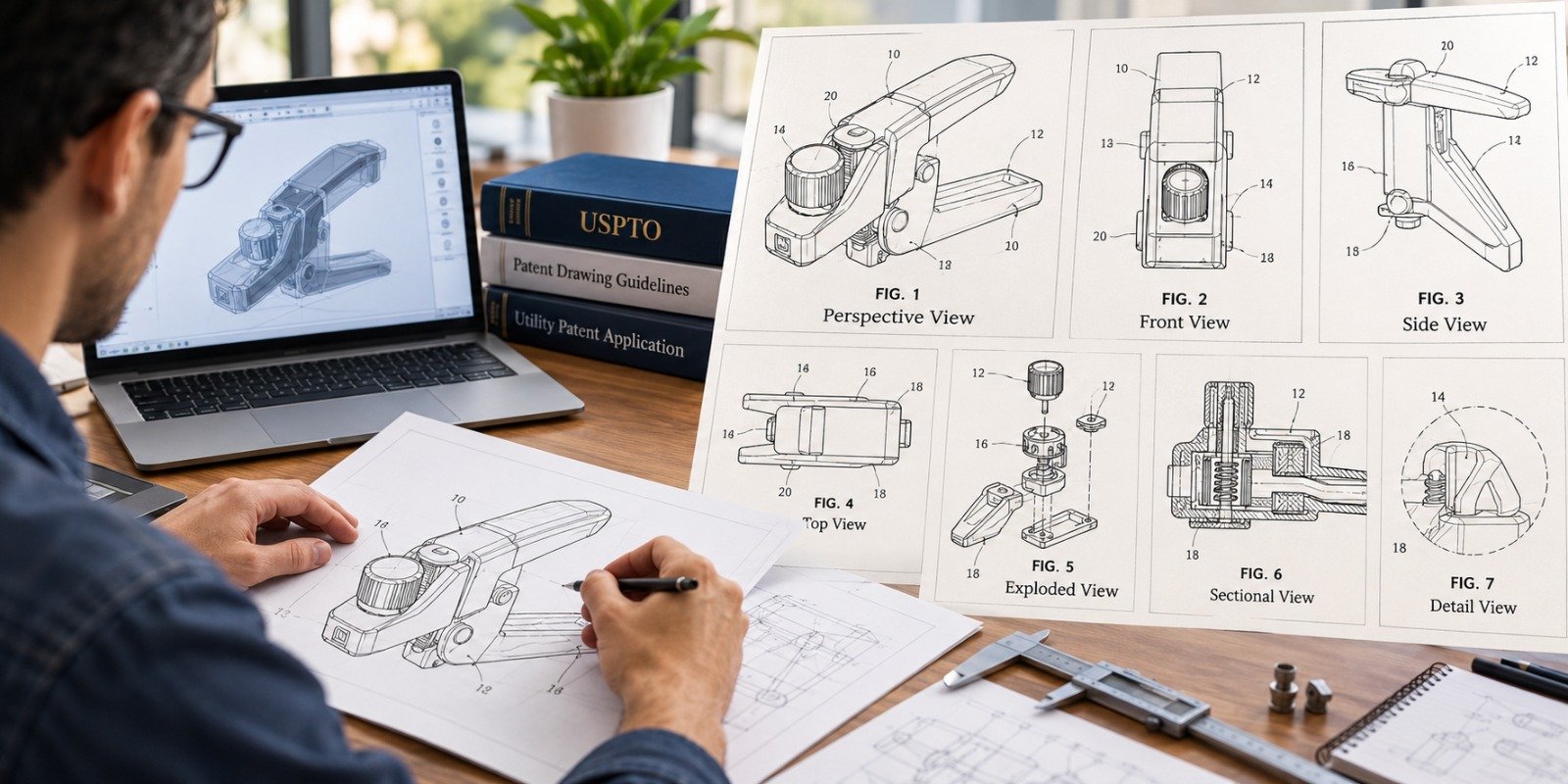
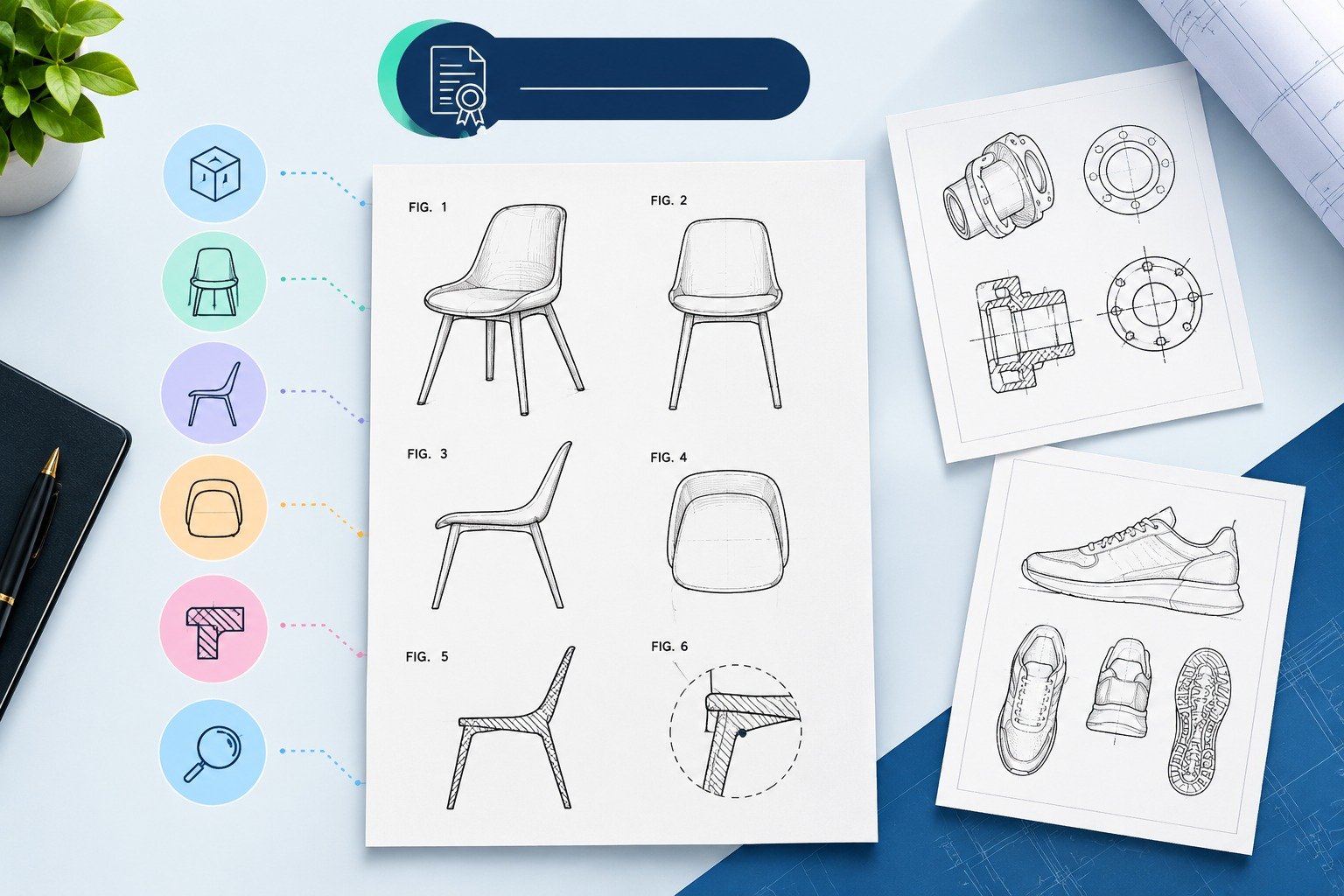
Based on the complexity, construction and operation of the invention, there are various types of mechanical patent drawings required in the process. An application for a patent may require several mechanical drawings that would give different views of the construction and operations of the invention. These views help in the elaboration of the complete picture of the invention in the patent specification.
1. Perspective View
A perspective view gives a realistic look at the invention and gives a clear idea about its shape and structure. It helps in visualizing the assembly of the invention and makes the mechanical assembly visible.
2. Orthographic Views
The orthographic drawings include the views from the front, back, left side, right side, top, and bottom views of the invention. They are very important for providing the dimensions, geometry and detailed structural information and are helpful in cases of mechanical parts, industrial machinery, tools, and engineering products.
3. Exploded View
The exploded view provides the information on how different parts make up the complete assembly. The exploded view of the mechanical patent drawings is very helpful for complicated mechanical inventions having multiple components.
4. Cross Sectional View
The cross sectional view shows the construction of a mechanical invention that includes the components inside the invention. These mechanical patent drawings are used for engines, pumps, valves, gear systems, bearing and other mechanical assemblies having hidden parts from outside view.
5. Functional or Motion View
The functional or motion view gives the view of the motion of the components and their interaction by using arrows or any other way to show the movement. It gives the description of the working of the invention.
Mechanical Patent Drawings are always needed when your invention consists of mechanical or functional elements that should be illustrated in the patent application. Proper drawings in your patent will help patent examiners to understand design, function, and relationship between components of the invention. Mechanical drawings will also make sure your drawings comply with USPTO guidelines.
Whatever inventor you are, an individual, a startup, an engineering firm, a manufacturer or patent lawyer – professionally done mechanical patent drawings will bring clarity to your patent application and your invention.
Yes, it is possible for you to make your own mechanical patent drawings, provided you have technical drawing skills and good knowledge of the rules set by USPTO for making patent drawings. The patent drawings need to meet certain guidelines in terms of format, line qualities, reference numbers, drawing views, and presentation. Any mistake can cost you an objection from the examiner or may even lead to an office action regarding corrected drawings.
The common problems associated with making your own patent drawings are:
Therefore, most inventors, startups, patent attorneys, and firms tend to get their mechanical patent drawings made from professionals.
Selecting the appropriate mechanical patent drawing service is essential when drafting a successful patent application. Professional illustrators do not only prepare technically sound illustrations; they make sure they comply with all USPTO standards. Before you choose a patent illustration service, pay attention to the following aspects:
Make sure that the service you use prepares patent drawings for mechanical devices such as engines, gears, industrial machines, robotics, heating and ventilation systems, manufacturing machinery, and other mechanical assemblies.
The selected service must be experienced in the preparation of patent drawings according to the 37 CFR § 1.84 USPTO guidelines. Drawings must be prepared in compliance with all submission-ready formats and requirements regarding lines, reference numbers, figure numbering, and the number of drawing views needed.
In most cases, there are strict deadlines for the submission of a patent application. It is recommended to find a company which guarantees quick delivery and revision of the drawing upon the request of the examiner.
A good company should make it possible for you to send sketches, CAD files, photos, or other technical data about your invention easily. During the cooperation with the company, you need responsive technical support.
It is highly desirable to deal with a patent illustration service which guarantees absolute confidentiality and is ready to sign an NDA.
Once you finish preparing patent drawings for your mechanical invention, they can be filed together with a utility patent application through the USPTO Patent Center. It is necessary to check that all drawings meet all USPTO requirements regarding formatting.
The correct preparation of drawings will help make the process of patent examination easier and faster for you.
Even minor mistakes in mechanical patent drawings can cause drawing objections, office actions, and other difficulties in the course of the patent examination. Avoid making these common mistakes to increase the quality of your patent application.
Color drawings cannot be provided unless you obtain special permission from the USPTO.
Drawing lines must be clear, even, and not faint or blurred in any way. Patents must not include pixelated drawings as well.
Each of the components described in the specification should be marked with corresponding reference numerals.
You should avoid putting too many components or figures on the same drawing sheet. If you need to do so, split these figures between different sheets.
Your drawing figures must be numbered according to the correct sequence and should conform to the figures used in the patent specification.
Keep editable files of your patent drawings that will allow you to make changes in case you receive some revisions from the patent office.
It depends on the complexity of the invention. Simple mechanical drawings are usually finished in 1–3 working days. If the invention is complex and contains many views then more time is needed.
For online submission of patent drawings in PDF format is preferable. For example, professional patent illustrators can also prepare editable files like AI, DWG, CAD etc.
Yes, CAD models, engineering drawings and 3D models can be successfully converted to USPTO-compliant mechanical patent drawings.
The answer will depend on the patent claim of the invention. Patent drawings should depict all components necessary to illustrate the invention.
Yes, in some cases it is possible to replace or correct drawings if it is asked by the USPTO. But, at any way the changes cannot include additional subject-matter.
No. 3D models can be helpful during preparation of patent illustrations, but the USPTO accepts only drawings in prescribed drawing format for the patent applications.
Professional mechanical patent drawings are prepared by experienced patent illustrators who have deep knowledge about engineering principles and standards of mechanical patent drawings.
Yes, many startups, manufacturers, individual inventors use professional mechanical patent drawings services to submit accurate and easily understandable illustrations for their patents.
Yes, complicated inventions usually need many drawing sheets to include perspective, orthographic, exploded, cross-sectional views and illustration of details of the invention.
The most important requirements for choosing company are: experience with mechanical inventions, knowledge of requirements and standards of USPTO, high quality standards, fast delivery, revision service and NDA contract.

At “The Patent Experts” our team specialises in turning complex concept and ideas into exact complaint patent drawings that meet the stringent guidelines of USPTO, EPO, WIPO among other major patent offices around the globe. With over 5+ years of experience, our team of skilled illustrators are efficient in producing high quality utility designs and trademark patent drawings. By combining cutting-edge technology with a deep understanding of global patent regulations, we ensure every drawing we create is ready for seamless submission and approval.
Quicks Links
Get in touch
Our phone number
Our email address
© 2026 The Patent Expert's All Rights Reserve
Made with ♥ by Website99