Need Patent Drawings? Professional Services in Massachusetts Explained
Massachusetts is known worldwide for its inventiveness. Every year, thousands of inventors work on new ideas in places like Boston, Cambridge, Worcester, and Springfield. These ideas include biotech tools, medical devices, mechanical machines, software-hardware systems, and clean energy solutions. However, it's a common misconception that having an idea confers patent protection.
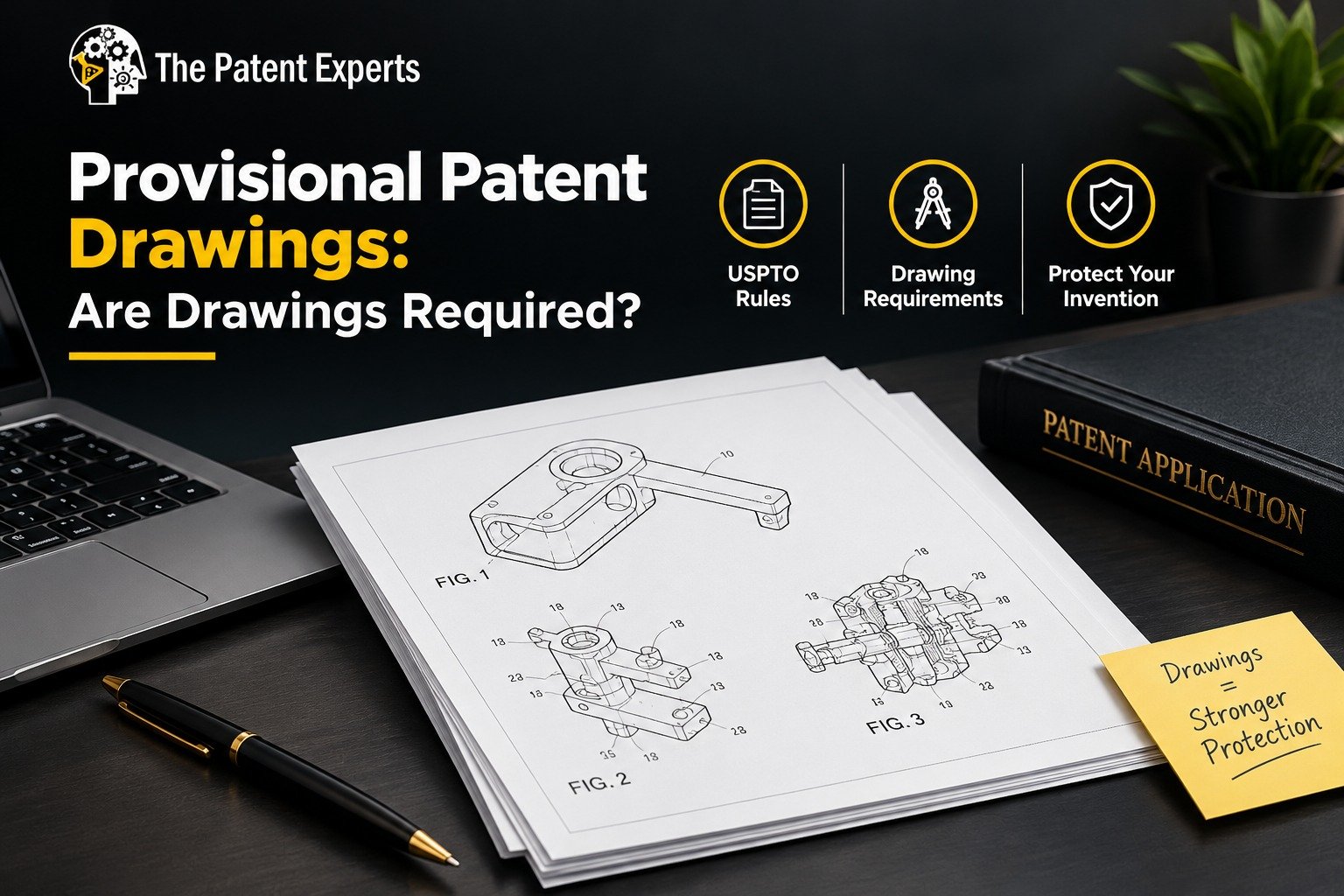
The patent drawings are an essential component of a patent application. These are legally binding technical documents that describe your invention to the examiner, not just images. The application may be postponed or denied if the drawings are ambiguous, lacking, or in violation of USPTO regulations.
Many inventors in Massachusetts rely on DIY drawings or inexperienced freelancers, which wastes their valuable time and money. The Patent Experts fill this gap by providing Professional Patent Drawing Services in Massachusetts—with accurate, compliant, and examiner-friendly illustrations.
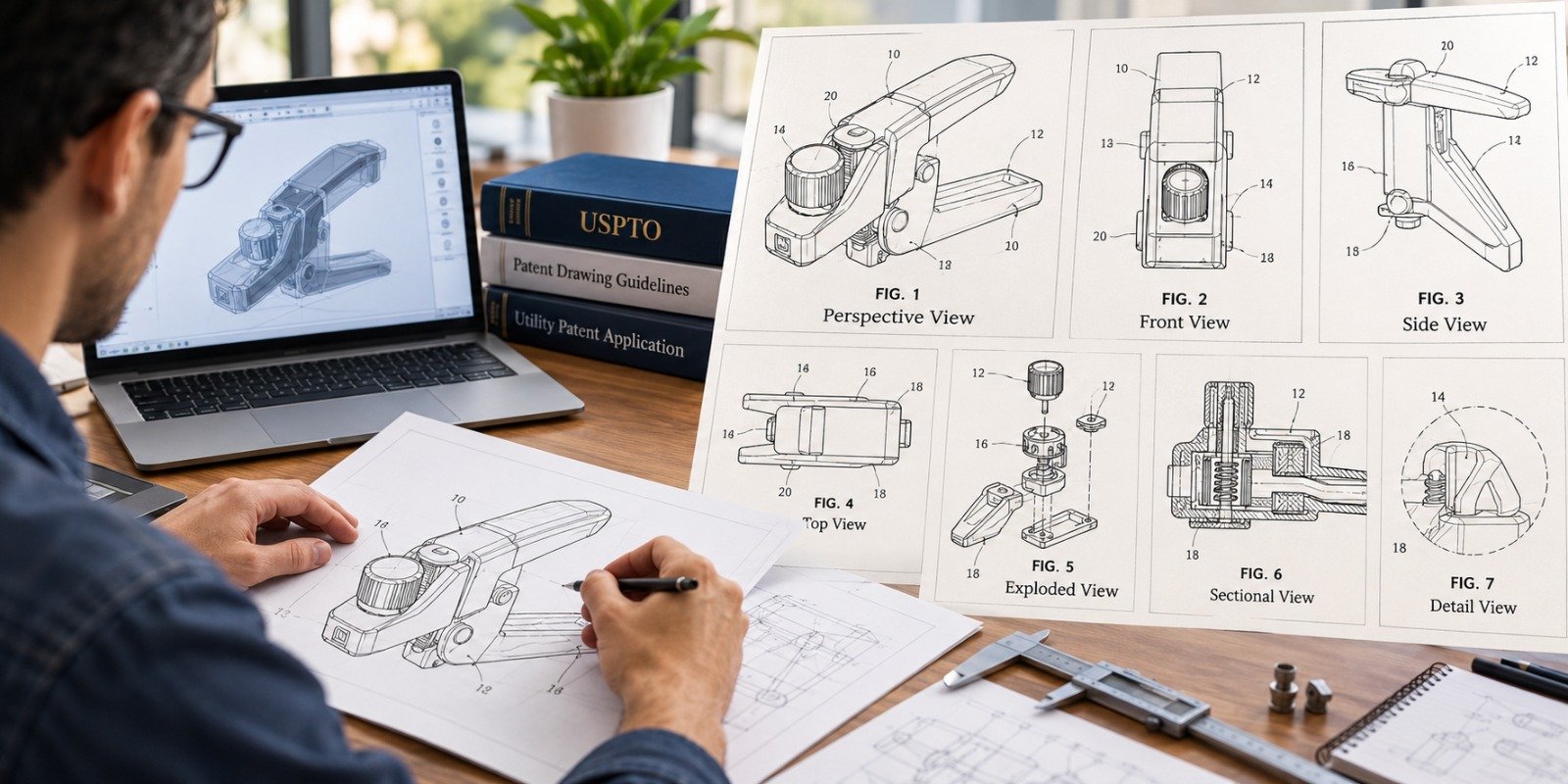
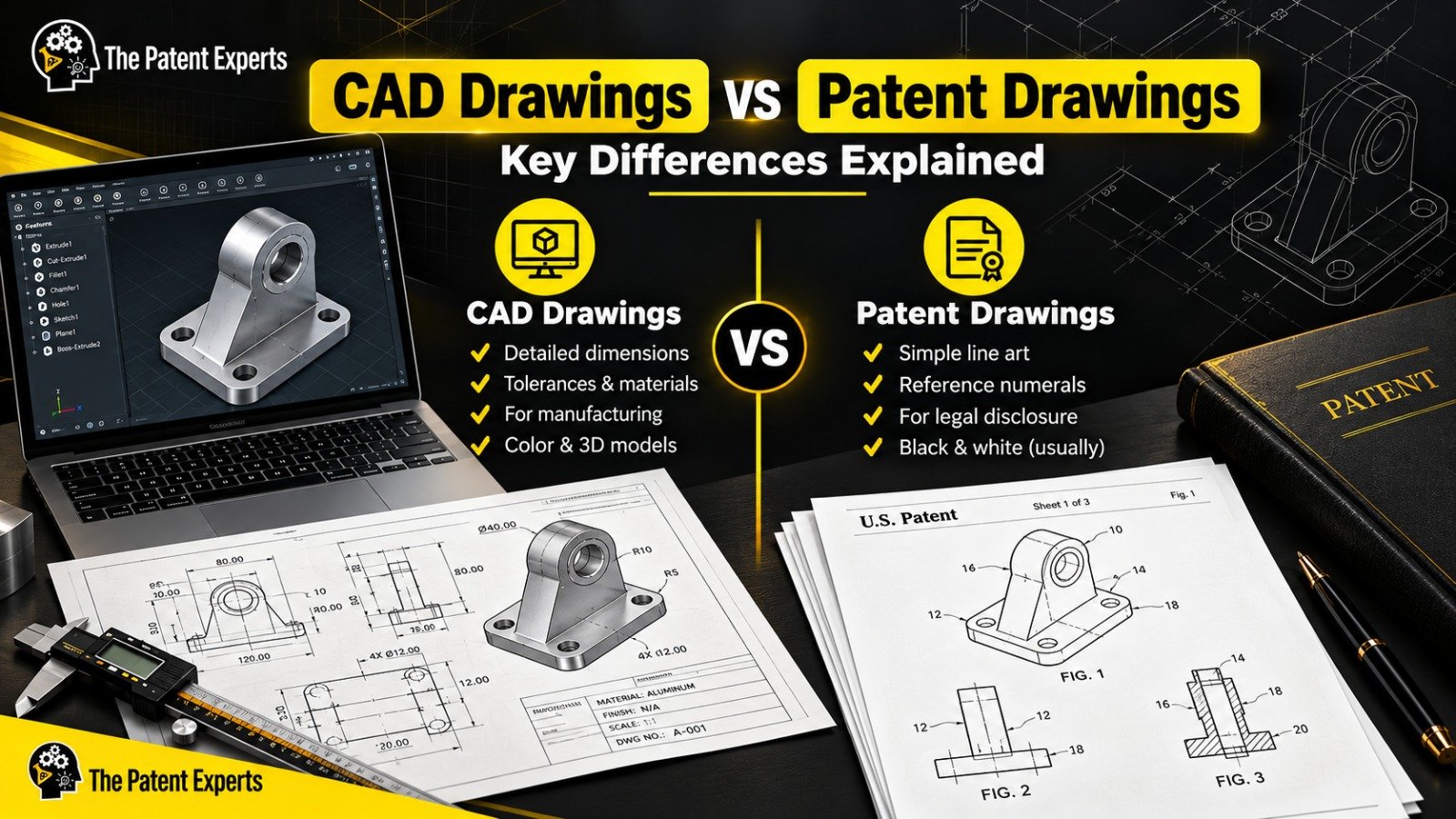
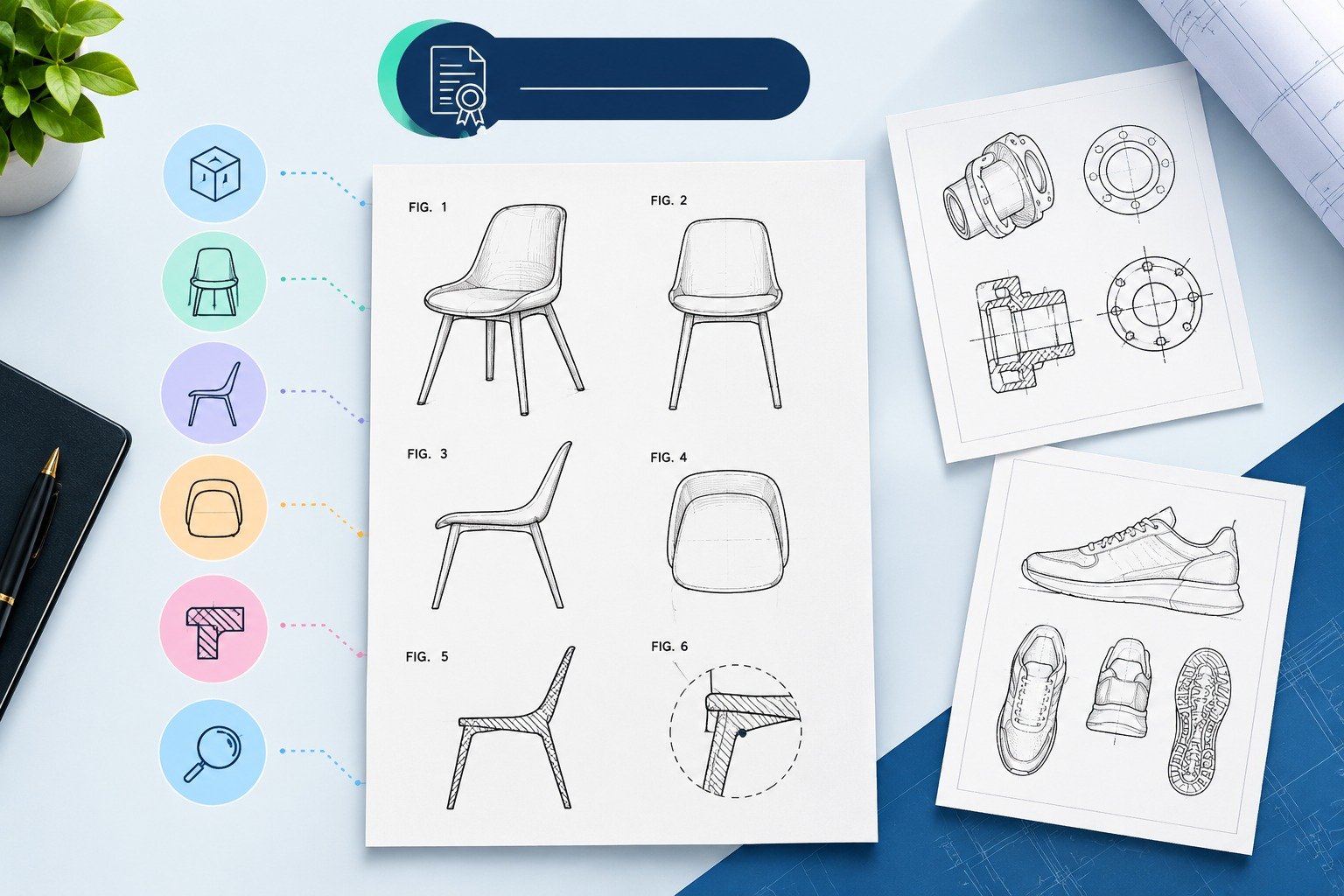
Patent drawings are technical illustrations that make your invention easy for any technical examiner or legal authority to understand. Because a clear image can quickly explain complex concepts, these drawings serve as visual support for the written patent description and, in many cases, are more effective than written explanations.
In addition to illustrating the design, patent drawings also serve as legal evidence. Examiners use these drawings to determine the novelty of your invention and the feasibility of your claims.
Patent drawings play multiple vital roles:
Inventors think the examiner will understand everything by reading the text, but the reality is that poor-quality drawings are the most common reason for objections.
According to the USPTO, patent drawings must follow strict technical standards. The examiner expects that the drawings:
In the case where the examiner thinks that your drawing does not reveal enough information, they will require you to either explain or correct it. This situation may lead to misunderstandings and stall your application process for weeks or even months, a significant setback for many rapidly growing startups in Massachusetts.
So, drawing your invention by a professional who knows USPTO standards is not merely necessary for safeguarding your invention; rather, it is a gradual process that you undertake after your patent has been granted.
Inventors in Massachusetts are generally considered highly skilled technologically. As a result, innovation clusters can be found in cities like Boston and Cambridge, Massachusetts, where inventors are developing and manufacturing high-tech medical devices, biotechnological devices, AI-based devices, and advanced mechanical equipment. However, inventors often struggle with preparing and filing patent applications, particularly with creating patent drawings, which causes problems for many when submitting their applications.
The main problem plaguing inventors is that they spend significant time developing and working on their inventions. Consequently, they devote insufficient attention to the legal and technical drawing specifications for their patent applications. This leads to substantial challenges in the submission process, rather than a smooth submission.
1. DIY Sketches:
Many inventors whose drawings are created by hand or with simple design software have their drawings rejected, even if they accurately depict their invention, because they don't meet the technical requirements of the United States Patent and Trademark Office (USPTO).
2. Complex Inventions:
While biotech and medical devices are everyday inventions in Massachusetts, illustrating these products is challenging because they typically involve numerous separate parts, layers, and internal functions.
3. Confusion Regarding USPTO Rules:
The USPTO strictly enforces requirements regarding line thickness, shading, the use of reference numbers, margin widths, view placement, and view types. Any potential error, such as missing reference numbers or incorrect margin widths, can lead to an objection from the USPTO.
4. Time Constraints:
Startups and independent inventors are often preoccupied with raising capital, testing their products, and bringing them to market. Due to time constraints in preparing patent drawings, inventors or companies usually make mistakes when trying to meet the USPTO's stringent requirements at the last minute.
Real-Life Example (Massachusetts-Based)
A hardware startup in Cambridge hired a freelancer to create its patent drawings at a significantly lower cost than an experienced patent draftsperson would charge. When the patent drawings were submitted, they looked good, but the USPTO later raised objections regarding the clarity and consistency of the reference numbers.
The objections to the patent drawings meant there wasn't sufficient clarity in identifying the parts, and the reference numbers didn't correspond to the parts' sequence in the drawings. This resulted in the following:
This example demonstrates that in Massachusetts, where competition is intense, errors in creating patent drawings can pose a significant threat to a business's success. Therefore, professional patent drawing services have become a fundamental necessity for all inventors.
The above makes clear why using professionals during the patent process is essential. Even a minor technical error in a patent drawing could delay the entire patent application process. Knowledgeable professionals are extremely important for this reason.
This clearly demonstrates why seeking professional assistance in the patent process is a wise decision. Patent drawings are an area where even a minor technical or formatting error can delay the entire application. This is why the role of experienced professionals becomes crucial.
It would be difficult for an individual or through a DIY approach to replicate the experience and expertise of a professional.
Patent professionals don't just provide illustrations; they deliver artwork that is ready and formatted for filing as a patent. They don't focus solely on the aesthetic appeal of their drawings; they also ensure they are legally compliant.
1. Comply with all necessary legal and technical standards.
2. Significantly reduce examiner confusion and follow-up questions.
3. Make the patent application approval process simpler and more predictable.
In a state like Massachusetts, known for its emphasis on technology, biotechnology, and medicine, the value of such a profession increases significantly, as it is linked to the complexities of developing and patenting a new invention.
That's why professional patent drawing services in Massachusetts have become not just an optional service, but an essential foundation for patent success for serious inventors and startups.
There are several types of patents, and therefore, different kinds of drawings must be submitted for each type. Patent drawings are prepared according to the USPTO guidelines, depending on the type of patent being requested. If incorrect or incomplete drawings are submitted, the application may be rejected.
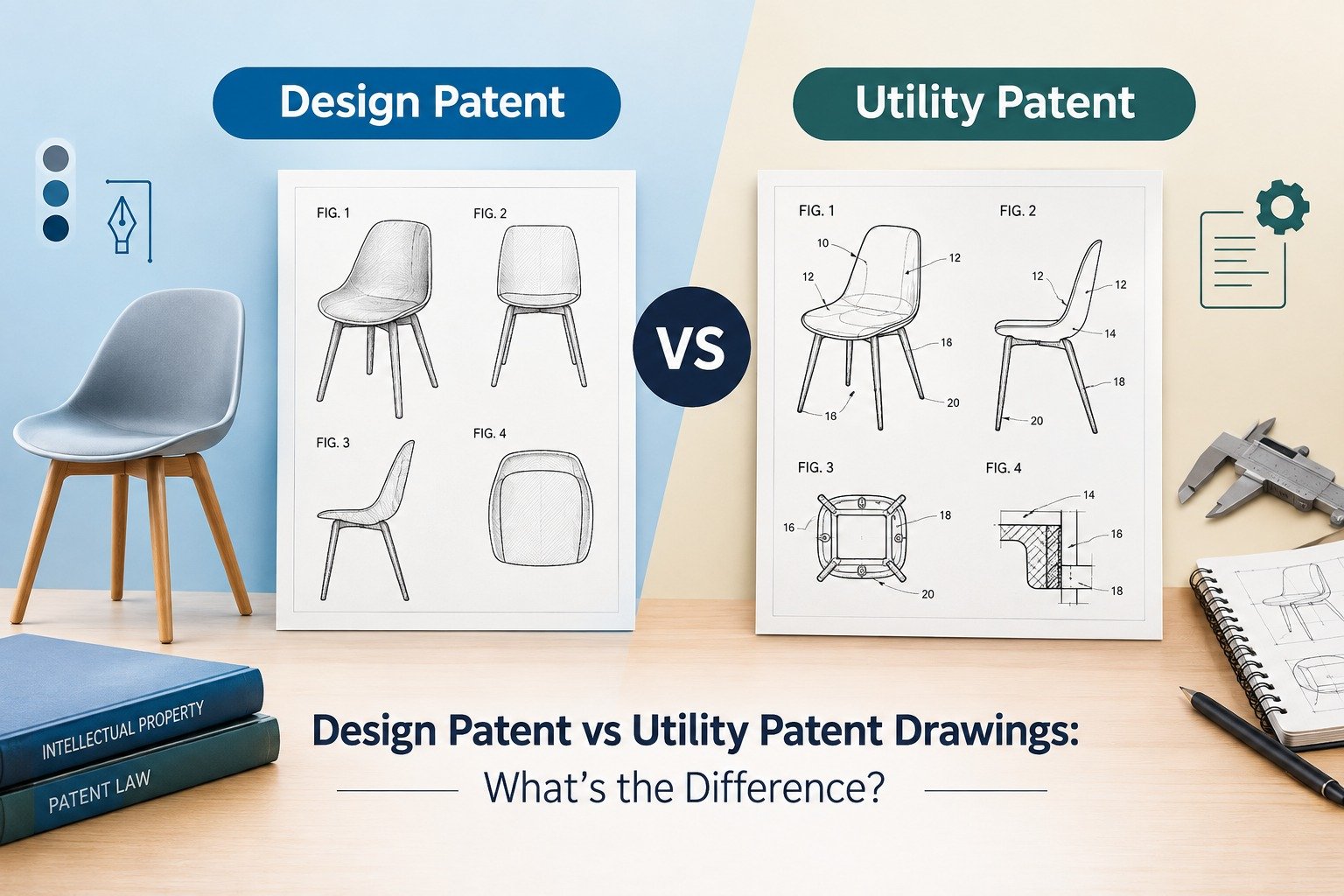
1. Utility Patent Drawings
Utility patents are the most commonly filed type of patent and are typically filed for inventions that have a practical use or function. Utility patents not only describe the form of the invention but also provide details on how the invention works and how its internal components function.
Who are these drawings for?
Design patent drawings are intended to show what the invention looks like, not how it works. The purpose of these drawings is to legally protect the unique appearance, shape, and design of the product.
The drawings associated with design patents are essential for
Drawings submitted with a plant patent will be used to illustrate the characteristics of a new and distinct variety of plant. Therefore, botanical accuracy is essential for this type of drawing.
The Patent Experts provide tailor-made, USPTO-compliant drawings for all patent categories. In creating their illustrations, they consider the major industries in Massachusetts—biotech, medical, engineering, and clean energy—so that:
Choosing the correct category for patent drawings is the first step towards a successful patent; therefore, it is highly beneficial to utilise the services of professionals in selecting the right category for your patent drawings.
Drawing patents can be performed effectively only when using a well-planned, organised methodology. The Patent Experts utilise this method structure to make it clear to inventors in Massachusetts at various stages of development so that they can be more confident and comfortable with their Patent filings during Phases 1 through 4.
Step 1: Understanding Your Invention
Step 2: Draft Creation
Step 3: Feedback and Modifications
Step 4: Final Submission-Ready Drawings
This methodical system of development results in fewer rejections, expediting the Processing of Patents for Inventors who use The Patent Experts as professional Patent Drawing Services in Massachusetts. In addition, the Patent Experts are available to assist clients from Start to Finish.
High-quality patent drawings are an essential part of any successful patent application. The approval of your patent application doesn't depend solely on a good idea, but also on the clarity and accuracy of your presentation. Therefore, patent drawings are often the first document the examiner sees, and if they are clear and of high quality, they can leave a lasting impression.
Clear views, appropriate labelling, and consistent numbering will help an examiner understand your invention quickly and without confusion.
Having a good fit between your written claims and your drawings provides the examiner with a clearer picture. It removes any uncertainty about the scope of the invention.
If the examiner needs to invalidate or reject an application due to poorly drawn submissions, time-consuming office actions will result. Quality drawings will help eliminate these issues.
When an examiner sees that your patent application was prepared with care and responsibility, this conveys a level of professionalism.
A Boston-based medical technology company utilised expert patent drawings for its cutting-edge medical device. The invention was quite complex due to its numerous internal components and intricate structure.
The company's patent attorney stated that the drawings were so clear that the examiner required no further clarification.
This experience is a direct result of adherence to regulations and quality-focused drafting; it was not a coincidence. This is why serious inventors always consider drawings not just a formality, but an investment.
Summary
Professional Patent Drawing Services are crucial for inventors in Massachusetts, a hub of innovation known for technological advancements in biotech, medical devices, and clean energy. Patent drawings, which are legally binding technical documents required for patent applications, must be transparent and compliant with USPTO standards. Poorly executed drawings, often created by inexperienced freelancers or through DIY efforts, can lead to application delays and rejections, costing inventors time and resources.
USPTO expectations for patent drawings include clean black-and-white line work, proper referencing, and accurate proportionality among various views. Common challenges faced by inventors include inadequate DIY sketches that fail to meet USPTO requirements, the complexity of inventions with numerous components, and time constraints that hinder thorough preparation.
For instance, a Cambridge startup's reliance on a low-cost freelancer led to objections from the USPTO regarding clarity in the reference numbers, significantly delaying their application and affecting their market launch. Such errors underscore the necessity of Professional Patent Drawing Services. These professionals are adept at navigating the strict regulatory landscape, ensuring compliance, and producing high-quality drawings that facilitate a smoother patent application process. The demand for these services is heightened in Massachusetts due to the competitive, fast-paced nature of its innovation ecosystem, underscoring their importance for market success.
Frequently Asked Questions
Q1. Are patent drawings mandatory?
Yes, patent drawings are required for most utility and design patent applications. If the invention cannot be clearly explained solely through text, the USPTO requires drawings. Transparent and compliant drawings make the approval process faster and smoother.
Q2. Does the USPTO accept digital drawings?
Yes, the USPTO accepts digital patent drawings provided they comply with the prescribed format, resolution, and technical standards. Incorrect file formats or poor-quality drawings can lead to objections.
Q3. Why does local expertise matter for Massachusetts inventors?
Biotech, medical devices, and advanced engineering inventions are common in Massachusetts, and these are often technically quite complex. Experts with local industry experience can accurately illustrate such inventions without missing essential details.
Q4. Why choose The Patent Experts?
The Patent Experts have substantial experience in USPTO compliance, understanding examiner expectations, and handling complex inventions. Inventors trust them because of their consistent quality, clear communication, and patent-ready output.

At “The Patent Experts” our team specialises in turning complex concept and ideas into exact complaint patent drawings that meet the stringent guidelines of USPTO, EPO, WIPO among other major patent offices around the globe. With over 5+ years of experience, our team of skilled illustrators are efficient in producing high quality utility designs and trademark patent drawings. By combining cutting-edge technology with a deep understanding of global patent regulations, we ensure every drawing we create is ready for seamless submission and approval.
Quicks Links
Get in touch
Our phone number
Our email address
© 2026 The Patent Expert's All Rights Reserve
Made with ♥ by Website99