15 Common Patent Drawing Mistakes That Can Delay Your Patent Application
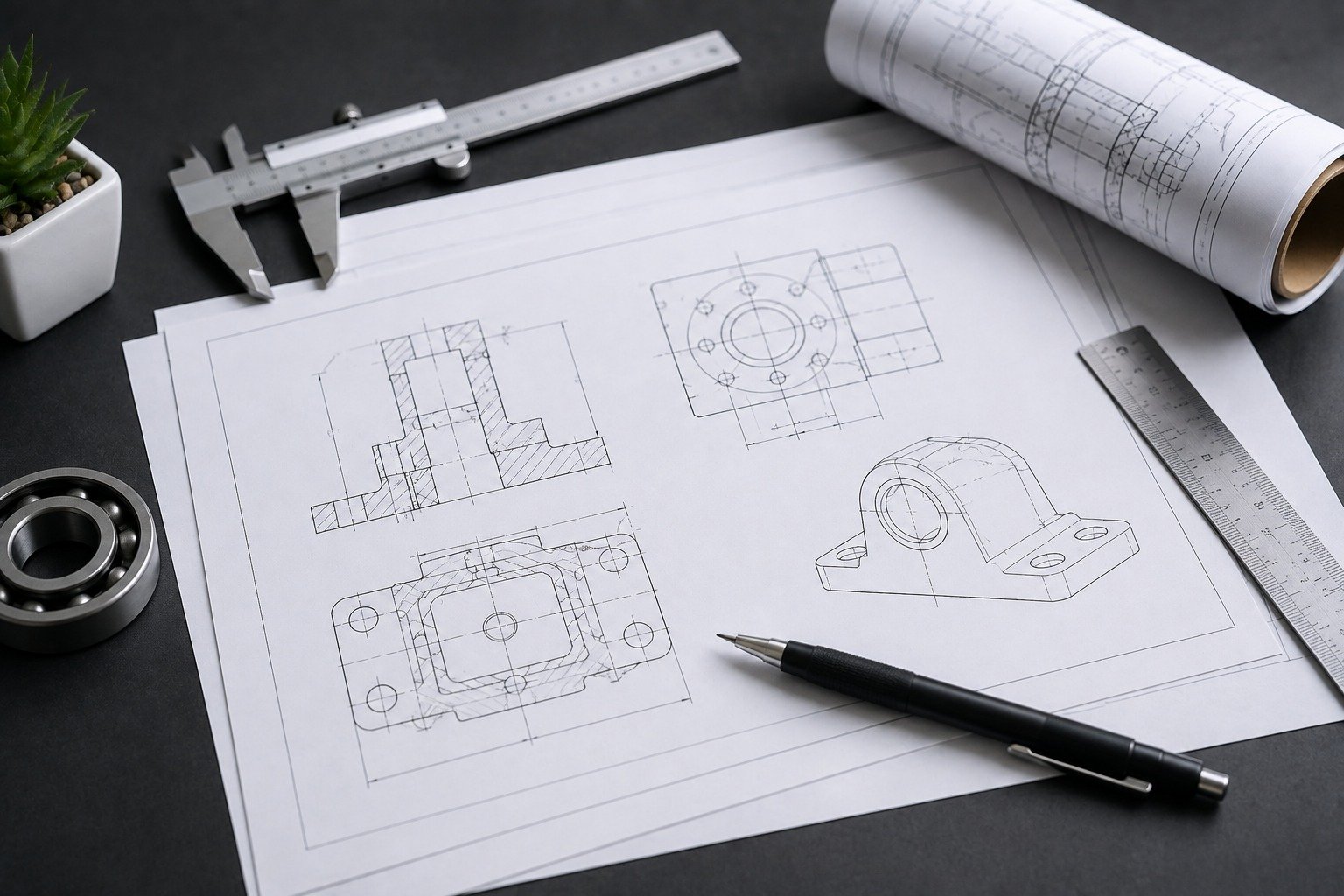
Patent drawings errors are considered one of the most frequent and avoidable causes of delay in a patent application process with the USPTO. Incorrect margins, fuzzy lines, non-uniform numbers of references, or insufficient views won't necessarily ruin your chances to get the patent altogether, but will surely cause the need for additional formal objections adding weeks or months to the process and requiring the submission of corrected drawings.
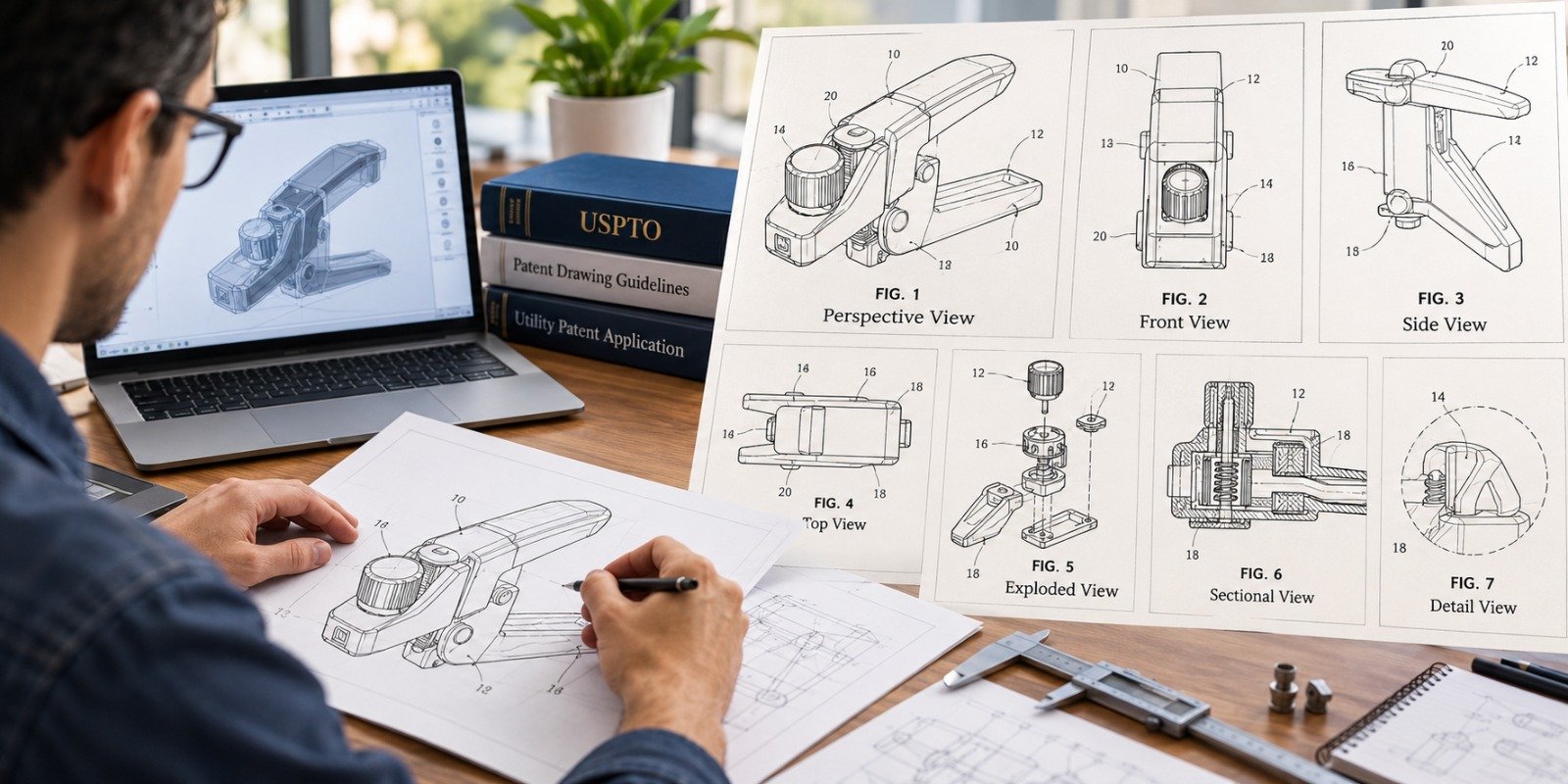
Notably, the patent drawings are more than mere illustrations. In the case of the utility patent application, these will show how the invention functions and will back up your claims. In the design patent application case, the drawings constitute the claim itself. In either case, each page will be checked against the standards defined by the 37 CFR § 1.84 and the tiniest deviations might lead to the object or the Office Action from the USPTO.
Here you will find a complete list of 15 common errors of patent drawings, actual requirements for patent drawings according to 37 CFR § 1.84, possible consequences of submitting erroneous patent drawings and methods of their detection.
The patent examiner uses illustrations to be able to grasp the structure of the invention, how it works, and its scope of coverage. Properly drawn and formatted drawings assist the patent examiner in the following:
Being able to understand the structure of the invention and interaction among its different parts
Ensuring that all features of the invention have been adequately supported in the disclosure document
Comparing the invention with prior art
Processing the patent application without delays related to requesting formalities改正
When it comes to design patents, the drawings serve as a direct indicator of scope of protection and thus any mistakes in labeling, omissions of views, and differences in the way the invention is shown may influence the scope of protection granted under the design patent. In the case of a utility patent, the drawings assist in writing and understanding both the disclosure and the claim limitations.
The errors listed below are amongst the most common grounds for objection of patent drawings by the USPTO. These include all that need to be known regarding the type of error, its significance, repercussions and prevention.
Regulation 37 CFR § 1.84 of the USPTO is the one setting forth the formal requirements to be met by patent drawings. Though, the content of the invention is not specified, the following conditions apply to every sheet of paper used.
Size of paper: the sheet shall be either US letter (21.6 × 27.9 cm/8.5 × 11 in) or A4 (21.0 × 29.7 cm) sheets; the sheets of paper in each application shall be of the same size
Margins: minimum margins to keep the sheets free from figures, reference characters, and page numbers
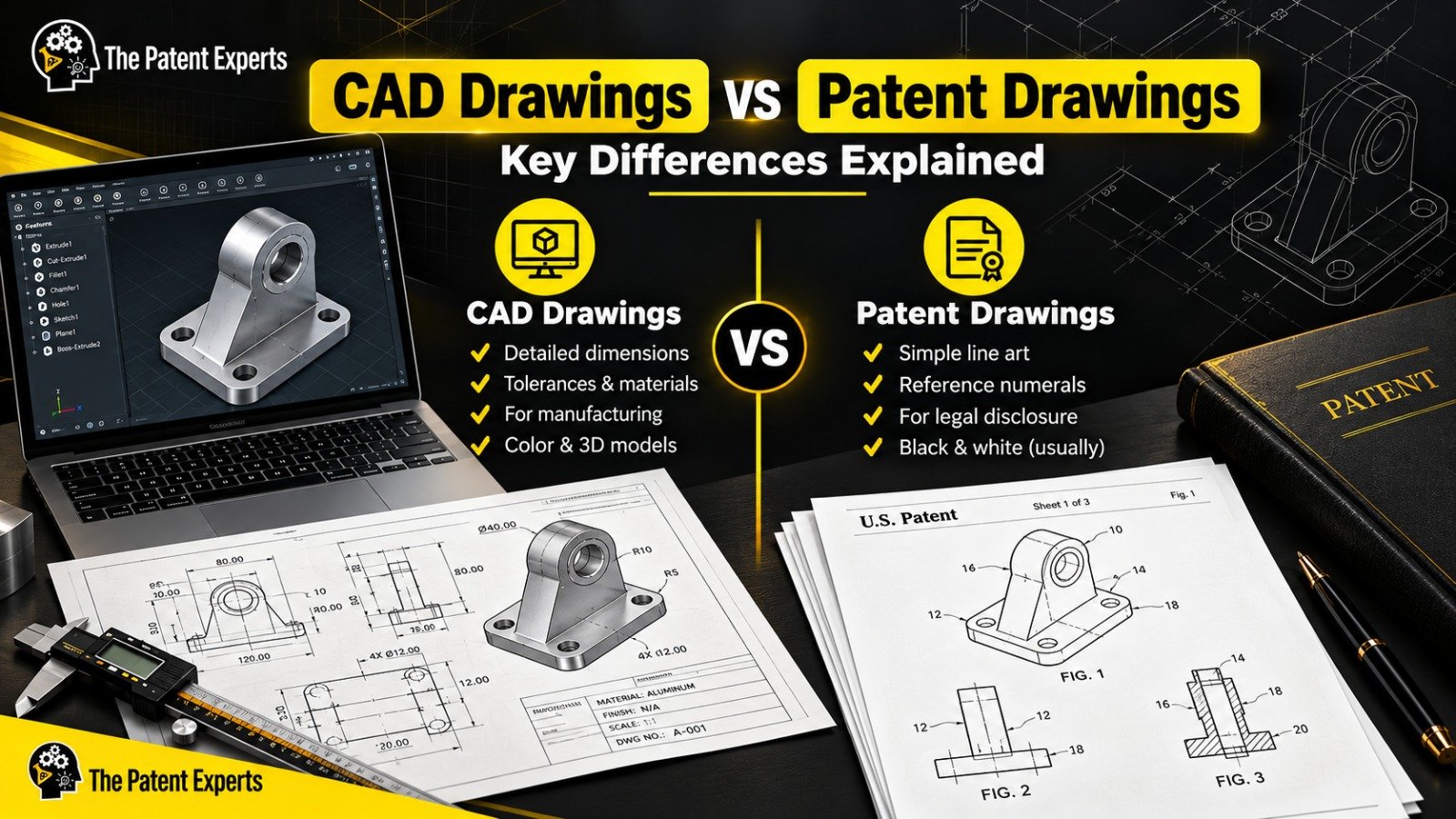
Lines: black, strong and dense lines of uniform thickness without any color or shading unless the patent applicant files and obtains a petition for the exception
Reference characters: clear and legible numerals and letters which can be reduced but still remain recognizable; all reference characters should be located outside the figures
Numbering of views: consecutive numbering of the figures "FIG. 1," "FIG. 2," etc.; consecutive numbering of the sheets of paper
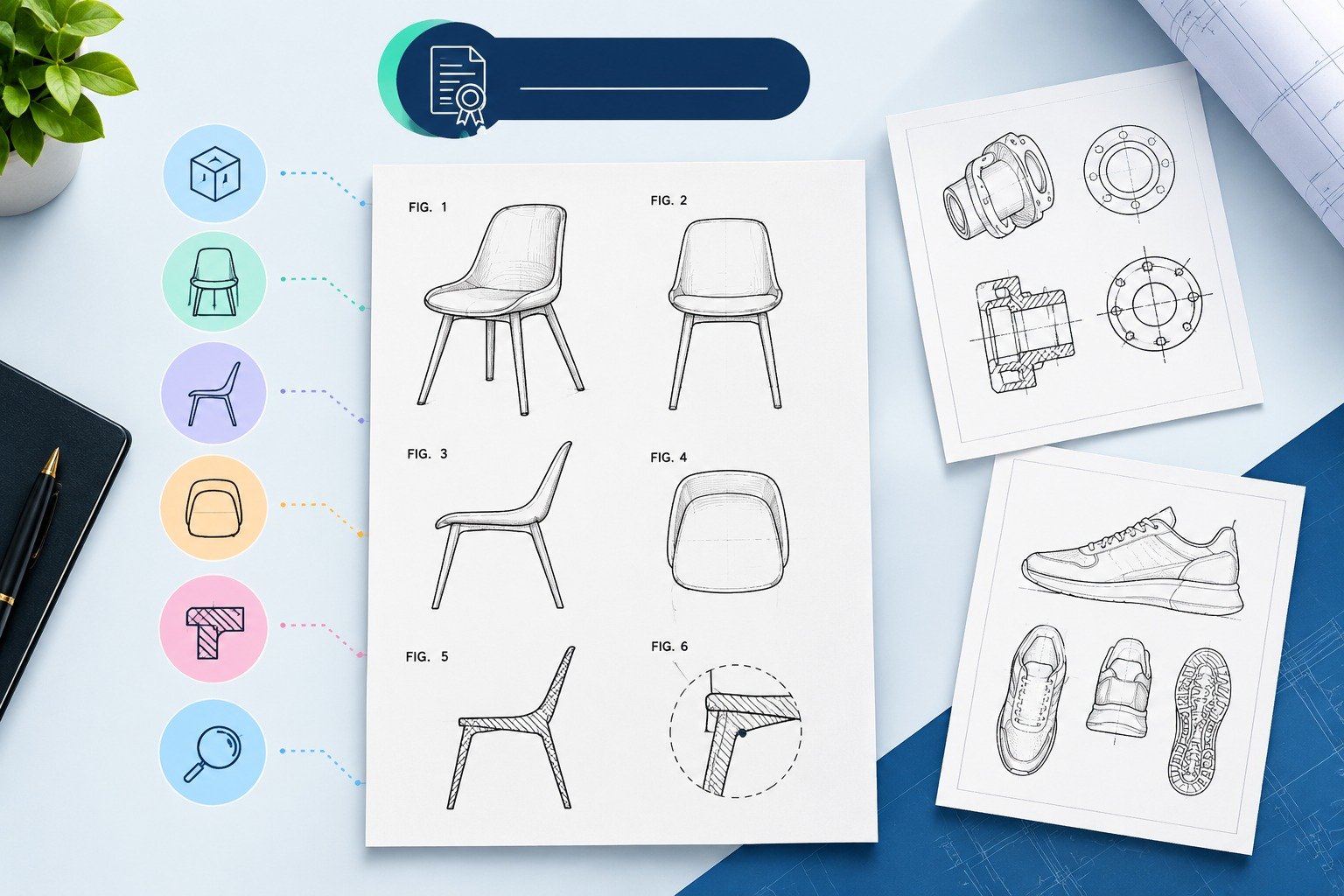
Shading: allowed and expected for the purposes of design patents in evenly spaced lines without solid blacks or other fillings
Photographs and colors: normally not allowed unless the applicant filed a petition to use them due to necessity
Identification: the title of the invention, the names of the inventor or joint inventors, and application/docket number may be contained in the top margin; replacement sheets of the drawings should also have their label
It is likely that the problems with the formal requirements to the sheets of paper will cause the objections to patent drawings.
If any of the patent drawings fail to meet the necessary USPTO requirements, a "Drawing Objection" will be raised by the Examiner, usually during an office action, to indicate which aspect of the required format has been neglected. This is independent of the evaluation of whether the underlying idea is capable of being patented or not.
After an objection has been made, the applicant will have to rectify the flaw pointed out in the objection within a certain time frame using either corrected drawings or completely new drawings for the same purpose. This can make the process of prosecution much longer, as well as entail extra costs to produce such drawings by the illustrator/attorney. Failure to submit the required documentation on time can lead to the abandonment of the patent application.
The key point here is that clearing an objection only resolves a formatting problem; nothing more and nothing less.
There are practical steps to prevent most common errors in patent drawings prior to submitting them to an examiner:
Do your drawings early. Start drawing alongside with drafting a patent application rather than when it is nearly finished.
Identify the type of the patent application. Utility patents and design patents require different approach to their drawings.
Use a good source material. Provide your draftsman with sketches, CAD files or photos and the comments from patent office if you modify previous drawings.
Use the 37 CFR § 1.84 guidelines starting with the initial draft. Put margins, size of sheet, and numbering conventions into templates for your drawings.
Compare with your claims and specification. Make sure that all the features mentioned in the claims appear on the drawings and numbering is correct.
Use an external review. Have somebody outside of your team of draftsman check your drawings with the help of the checklist provided below.
Store all the files. Keep original files with the drawings in order to make possible corrections or prepare substitute sheets if necessary.
A quick pre-filing checklist to catch common patent drawing mistakes:
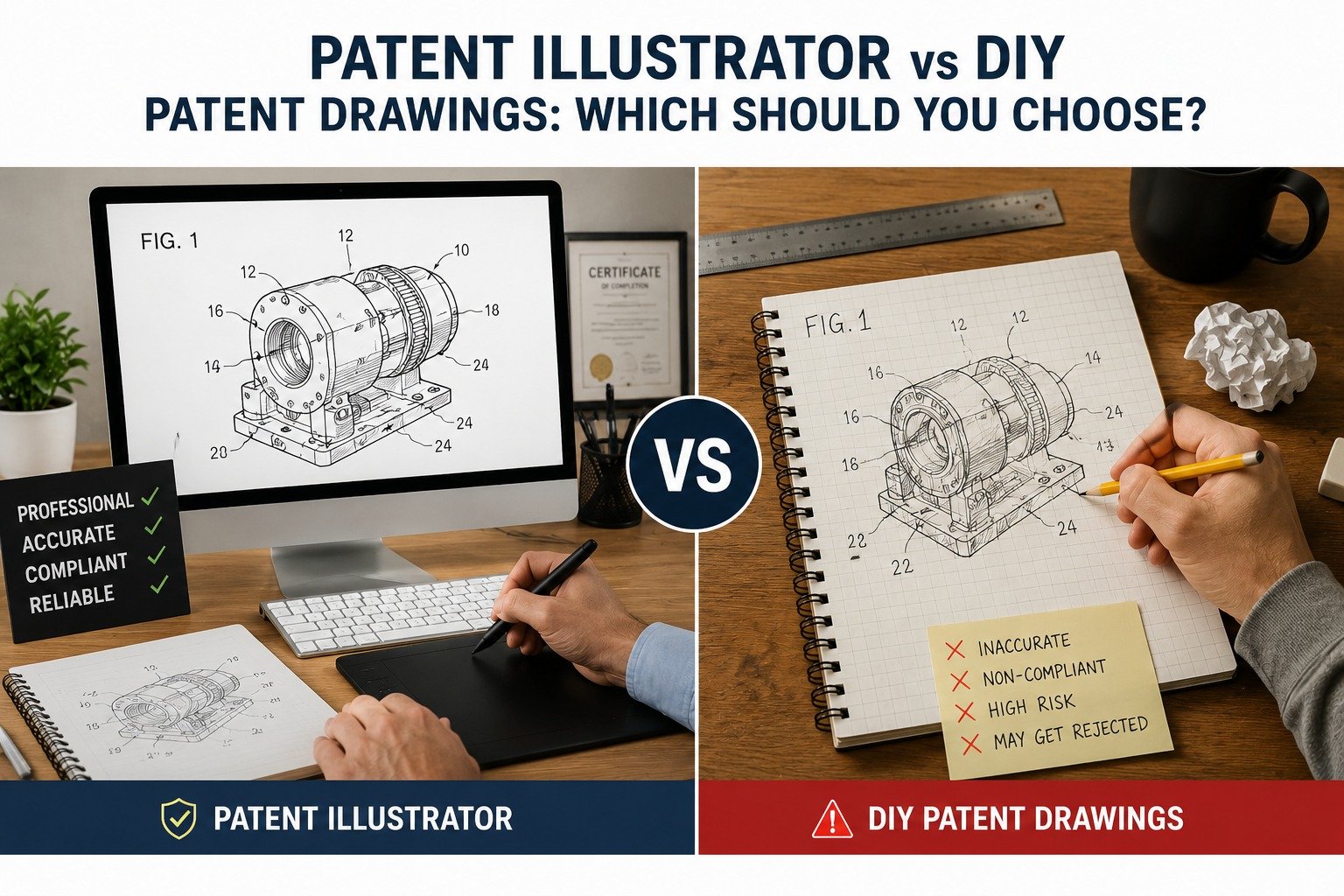
Yes. A professional patent illustrator used to creating drawings in accordance with the rules set out in 37 CFR § 1.84 would have less trouble avoiding the format problems described here because they are typical problems that have been repeatedly pointed out by experts.
The reason is the established procedure that an illustrator uses when it comes to margin, reference numbers, views, and shading. In addition to that, the professional can transform a preliminary design sketch, a CAD drawing, or even an actual picture of the product into a format appropriate for examiners. Still, keep in mind that an illustrator's main concern is the correct drawing, not necessarily the claim strategy.
Patent Illustration Experts prepares patent drawings for utilities, designs, mechanical and 3D modeled applications that can be prepared for filing in the USPTO. Just some useful information regarding preparation of drawings by the team:
In case you need to fix drawings that were previously objected or you are just going to prepare drawings for your utility or design application to be accepted in USPTO - The Patent Experts can help you out.
What are the most common patent drawing mistakes?
Most common mistakes in patent drawings include inappropriate margins, images being of poor quality or too blurry, inconsistent use of reference numerals, lack of required views, wrong shading, etc. Most commonly, all these mistakes lead to an objection rather than rejection of the invention.
Is there a case when patent drawings make a patent be rejected?
Patent drawing mistakes are not likely to lead to rejection of patent claim. Instead, it usually leads to objections and issuance of a notice by examiner about the necessity to submit replacement drawings.
What does 37 CFR § 1.84 require?
This regulation contains the technical requirements for patent drawings established by USPTO. These requirements refer to such issues as paper size, margins, line thickness, reference characters, view numbering, shading, cases when using color, photographs, and computer generated drawings is acceptable. Drawings should usually comply with these rules in both design and utility patents.
Are there any differences between technical requirements for utility and design patent drawings?
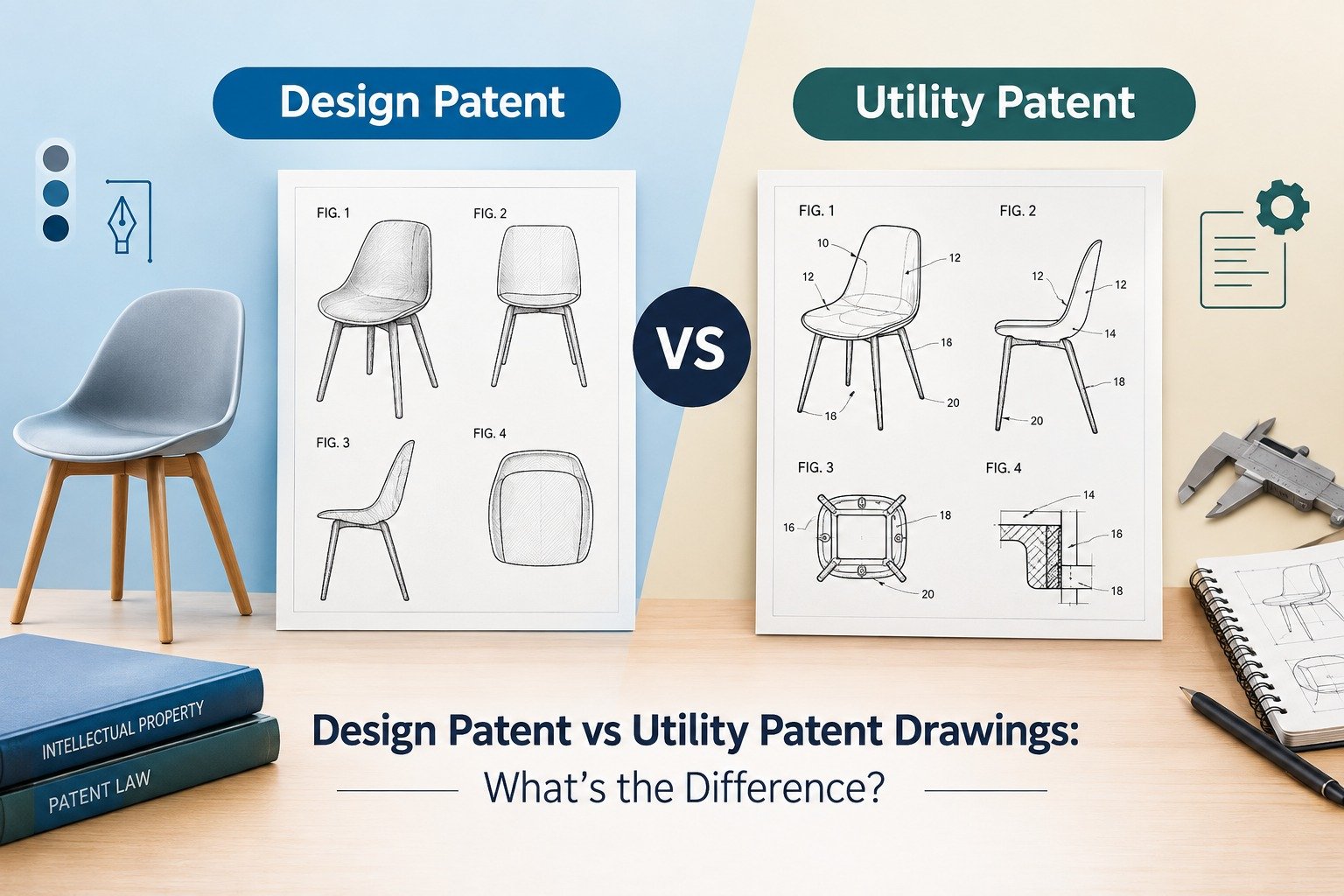
Sure. In design patents drawings should present the whole appearance of the product viewed from several directions because it defines its claims. As for utility patent, it usually includes more illustrations about the structure and operation of the invention with less emphasis on particular views.
Can I fix patent drawings after filing?
Drawings can usually be corrected after filing through filing replacement sheets based on the Examiner's objection to them. Corrected drawings will have to be in compliance with USPTO requirements and not include new matter that wasn't disclosed in the application.
Are color patent drawings allowed?
Color drawings and photographs are not allowed in utility or design applications, unless there is a petition filed that provides justification for such drawings. Black and white drawings, including those that are made up of line drawings and line shading, are expected by default.
How many views are required in a design patent?
The number of views that need to be provided in a design patent depends on the particular invention's shape and on the views that make sense in order to disclose all the features of its ornamental design.
Do patent drawings need to be to scale?
There is no requirement to provide a scale for drawings, however, the elements within each patent drawing should be represented in proportion to one another. When there is a need to show a small part of an invention in greater detail, a Detail view is provided with a lead line.
How long does it take to fix rejected patent drawings?
Replacement drawings will be prepared usually much faster than the original drawings as the basis for the drawings is already created, however, the time frame for fixing patent drawings is still limited by USPTO requirements.
Should an inventor hire a professional for patent drawings?
An inventor would want to hire a professional for the creation of patent drawings, because the person is likely to know how to comply with 37 CFR § 1.84 and avoid common drawing objections, which are checked by an Examiner during the examination of an application.
Can patent drawing mistakes delay the whole application?
Yes, they can cause delays. A drawing objection suspends further consideration of the application by an Examiner, until corrections to drawings are submitted. It is possible to avoid this type of delay by properly preparing drawings before filing them.
The majority of errors in the drawing portion of a patent application relate to formality concerns rather than the actual invention — margins, reference numbers, omitted views, or drawings that do not correspond to the description. In themselves, these aren’t difficult errors to address. However, they are often one of the most common grounds for an objection that could have been avoided in what otherwise would have been a simple application process.
Reviewing the above checklist prior to submission, or getting professional patent illustrations done right from the start, will typically be the more effective method of producing a drawing section compliant with USPTO standards. In the event that you are working on either a new application or an objection to existing drawings, The Patent Experts can assist with all sorts of patent drawings, including utility, design, mechanical, 3D and replacement.

At “The Patent Experts” our team specialises in turning complex concept and ideas into exact complaint patent drawings that meet the stringent guidelines of USPTO, EPO, WIPO among other major patent offices around the globe. With over 5+ years of experience, our team of skilled illustrators are efficient in producing high quality utility designs and trademark patent drawings. By combining cutting-edge technology with a deep understanding of global patent regulations, we ensure every drawing we create is ready for seamless submission and approval.
Quicks Links
Get in touch
Our phone number
Our email address
© 2026 The Patent Expert's All Rights Reserve
Made with ♥ by Website99