Patent Illustrator vs DIY Patent Drawings: Which Should You Choose?
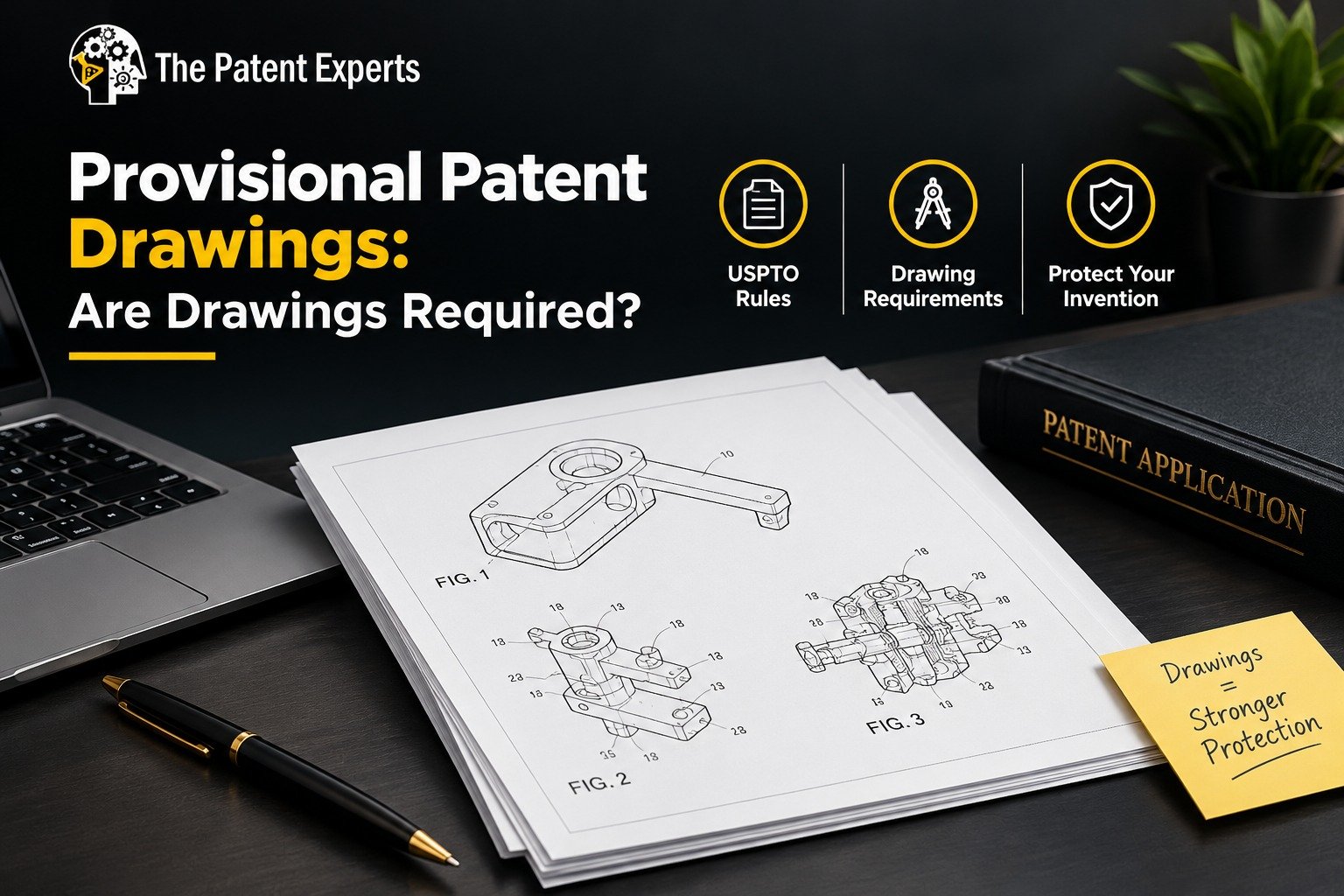
For those drafting a patent application, you are surely aware that it is not sufficient to write a good descriptive part. Patent drawings are usually the most highly criticized element of patent application, and making mistakes with them will cause you delays or objection which will make you lose both money and time. This leads to a critical decision which all inventors have to face at one point: whether to hire a professional patent illustrator or to do the drawings yourself in order to save some money.
There is no simple answer, however, there is a clear criteria which should help you to make your choice. In this article we will consider what each of the alternatives entails, what are its advantages and disadvantages.
However, patent illustrations are not intended to merely make the patent look nice. For instance, in the USA, it is mandatory that the drawings be included in every patent application (utility or design patent) where an invention can be graphically represented. Patent offices will examine your drawings in order to grasp the structure and function of the invention, as well as the limitations on it — in many cases, better than your actual written claims.
Your drawings will be compared line by line with your claims. If the examiner finds out that some claimed features are missing in the illustration or that the reference numbers are not consistent with the drawing, he/she will object. This will require you to correct the mistake and submit another filing, thus postponing the examination process for weeks or months. In case of design patents, your drawings represent the claim itself, and any inconsistencies in shading or view might limit your patent or undermine its protection completely.
This is why your choice between an illustration expert and do-it-yourself patent drawings comes down to your tolerance of risk
.
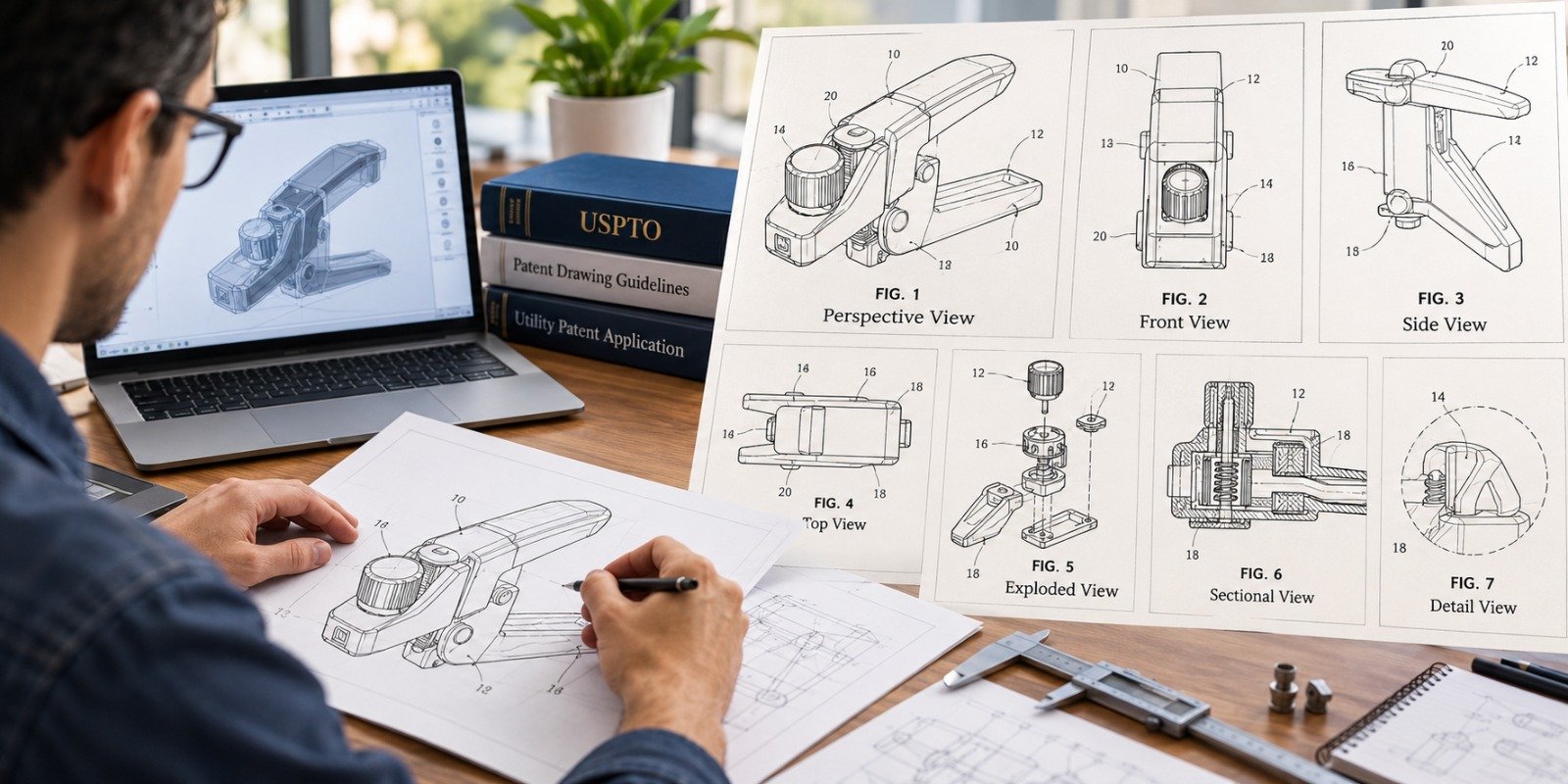
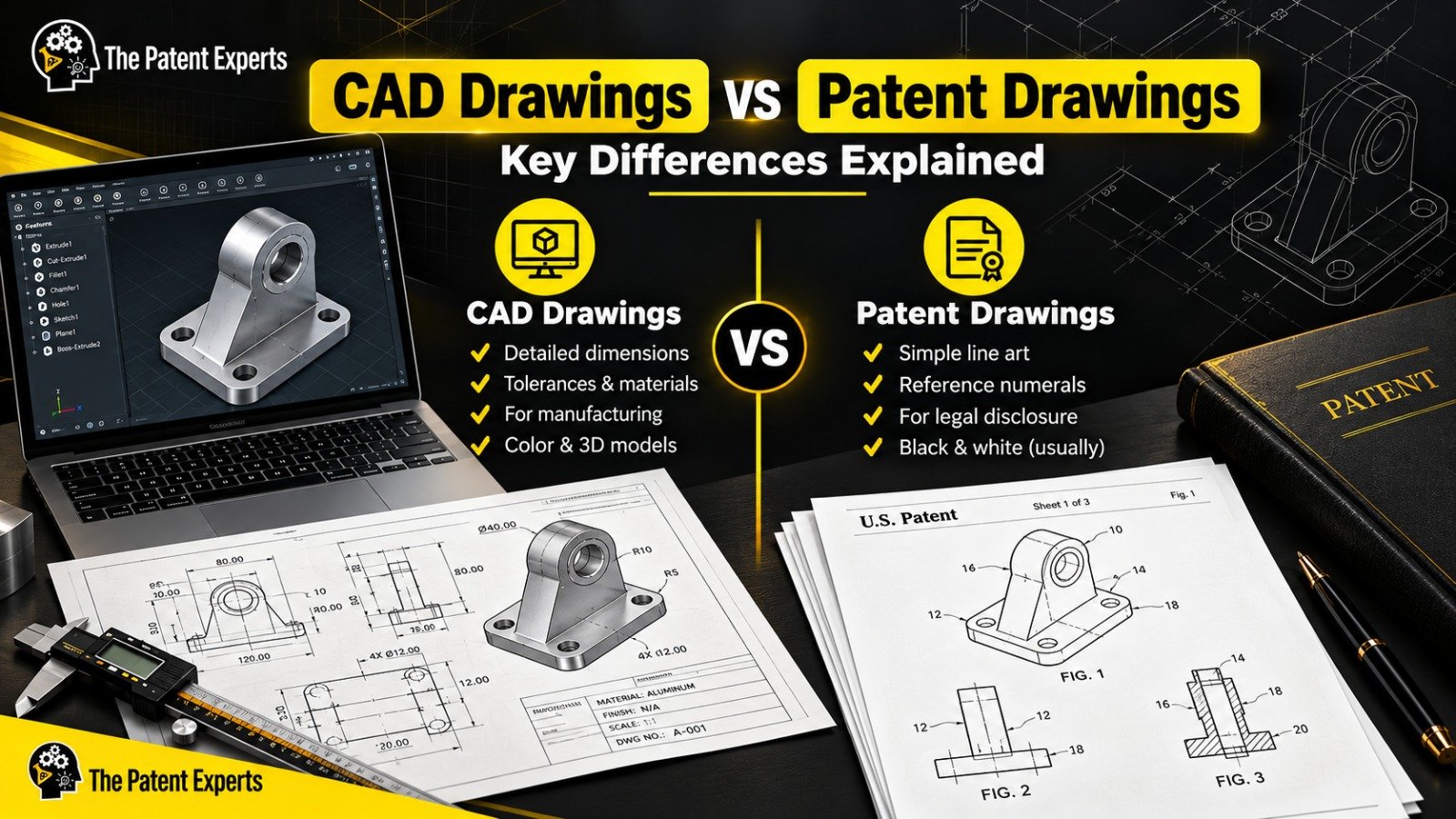
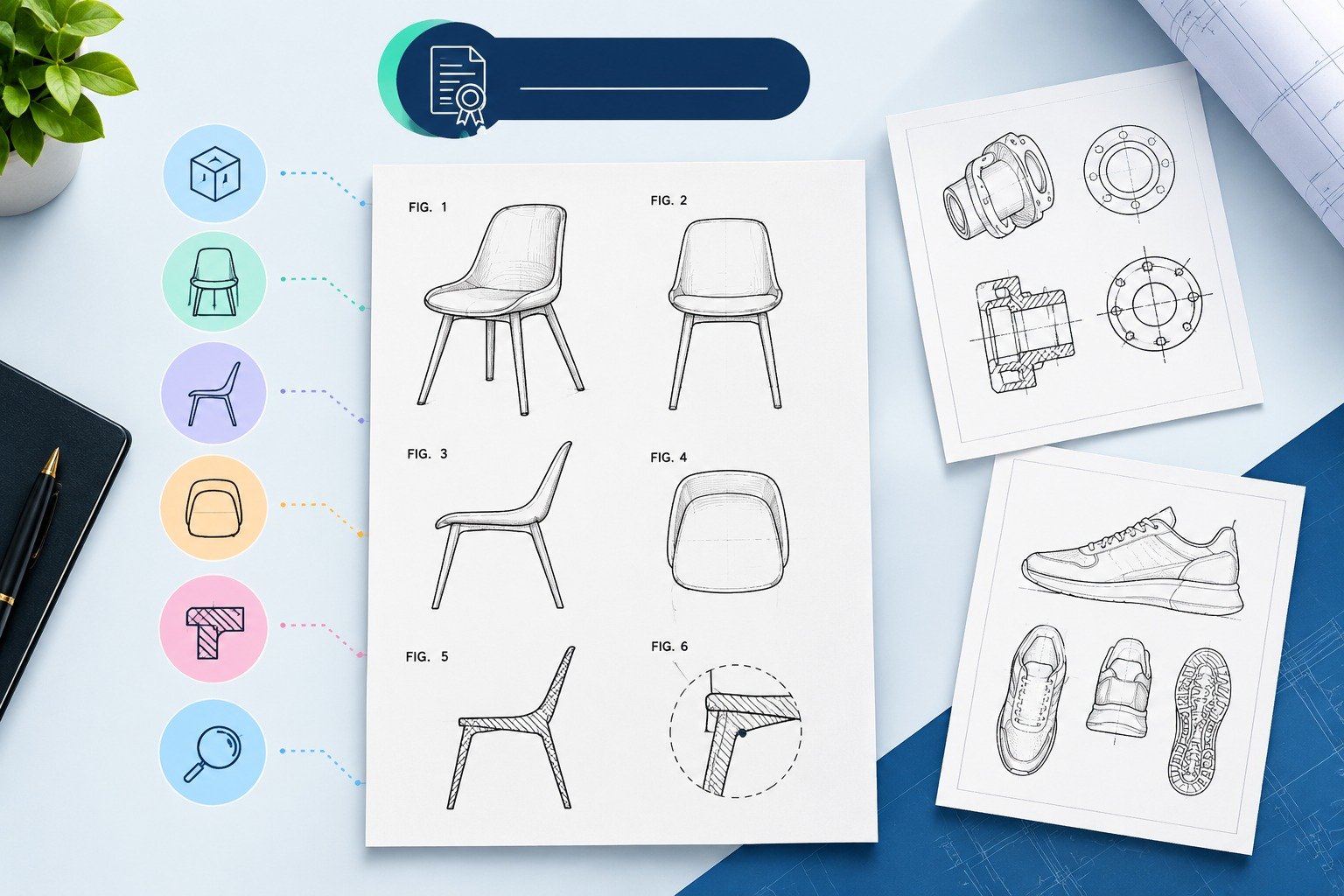
A patent illustrator is not synonymous with a graphic designer or even a CAD drafter. Patent illustrators are professional people who have mastered the particular style of illustration required by the patent office, such as margins, line thickness, shading, numbering, and views (top view, side view, exploded view, etc.).
Here's what you typically get when working with an experienced patent illustrator:
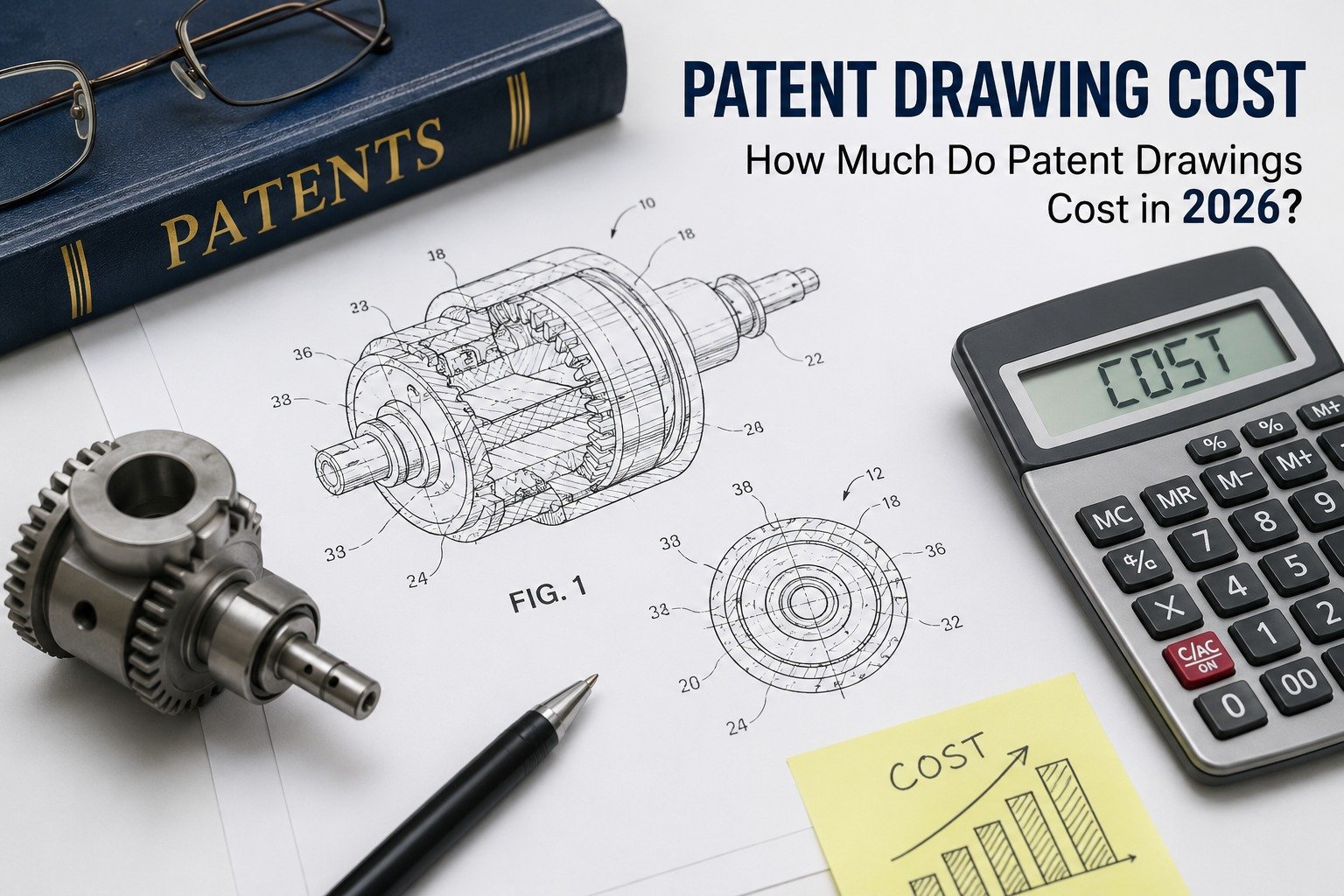
Professional illustrators base their designs on your drawings, photographs, CAD documents, or verbal instructions and create images for the examiner's consideration. The turnaround period may take from a few days to up to two weeks, and costs usually run between $75 and $200 per page, although complicated mechanical drawings or software interface illustrations may be more expensive.
DIY entails either hand drawing followed by scanning of the same or using design software, from relatively simpler software such as Microsoft Visio and PowerPoint to the more advanced versions such as AutoCAD, SolidWorks or Adobe Illustrator.
There are several advantages to this method, namely no illustrator fees, full control over the process and instant correction of errors without having to depend on another person’s schedule. The method comes naturally to those who are already familiar with CAD while designing the product.
The problem is that DIY is an elaborate process in which one has to familiarize himself or herself with the format of drawing the invention as required by the patent office. Most people applying for a patent do not know much about the format that they have to follow since they have never encountered such rules before. It requires some time for one to get used to the formats of drawing such as view conventions, appropriate shading, margins and reference numbering.
DIY will cost less in the beginning, and it will even be free if you have your own copy of some design software. An illustrator will work on an hourly basis, and the price per page can range between $400 and $1,500 depending on the number of figures involved (five to ten). Nevertheless, this comparison is only valid if your drawings will be approved upon the initial submission because every revision of the application will cost extra money.
This is where the professional illustrator shines. There are many requirements for formatting patents, and even small discrepancies, such as using a reference number in text while not having it in a drawing, varying line widths, or an improper view, may become grounds for objections. The illustrator has worked on hundreds of drawings before and knows exactly which elements the examiner will object to.
While drawing yourself is quick provided that you have the skill set, this is where the true cost of time comes into play. Should your drawings be challenged, then it is likely you will incur extra weeks, possibly months, in order to submit revised drawings that have to be re-approved by the patent office.
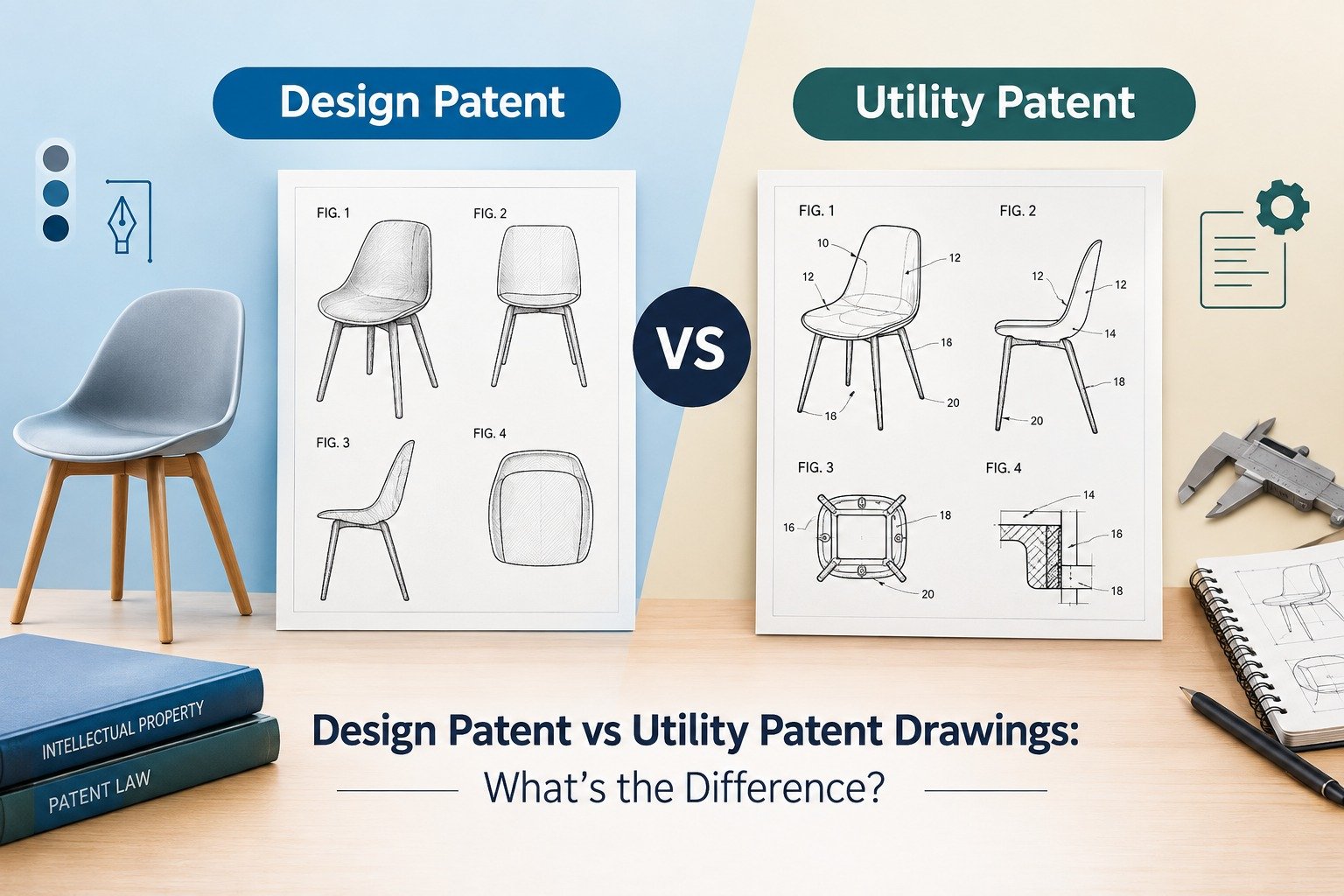
Mechanical inventions that rely on simple geometries are more lenient when tried DIY. However, inventions that depend on the movement of parts, layering of components, software interfaces, or mechanical connections are extremely hard to depict correctly without professional help. In case of design patents, DIY patent is especially dangerous because it can alter the extent of legal protection since the representation of shade and surfaces determines the scope of protection.
Not only is an objected-to drawing annoying, but it will make things difficult during priority date negotiations, will interfere with being able to declare a patent pending status when communicating with potential investors or partners, and in extreme circumstances will be such that it creates an element of uncertainty that will complicate any enforcement actions. This becomes extremely important for those intending to license, sell, or protect their patent.
DIY isn’t necessarily the bad option. It usually succeeds in situations where:
DIY drawings are most applicable to provisional applications than anywhere else. The reason for this is that provisional applications do not have to adhere to the formatting standards that non-provisional applications are subject to. Thus, simple drawings or CAD renderings will do fine as long as the idea is conveyed effectively.
A professional illustrator is typically a better choice than:
With regard to commercial significance, the cost of hiring a professional artist is a very modest price to pay for the sake of not having delays related to drawing or limiting the claims.
Many inventors don't have to choose one extreme or the other. A common and cost-effective strategy is:
This approach lets you move fast and cheap early on, while still investing in professional quality when the stakes — and the formatting requirements — are highest.
Inventors who even have average skills for drawing may often end up making the same mistakes when doing patent drawings by themselves. This makes it possible to predict and thereby prevent the most typical reasons for objection:
No such errors imply that DIY is not feasible; rather, they serve to illustrate why the professionals who have seen these principles implemented daily are able to do it correctly the first time, whereas newbies fail at it.
Do all patent applications require drawings?
But not all of them do. In case your invention is one that can be described in drawings – which constitutes the majority of mechanical, electrical and design inventions – then you will definitely have to submit drawings for the examination of the patent office. But there are some exceptions.
Can I switch from DIY drawings to a professional illustrator later in the process?
Certainly. A large number of inventors choose to go ahead with the provisional patent application using their own sketches before approaching a professional artist for the non-provisional patent application.
How much does a professional patent illustrator typically cost?
Costs depend on the level of complexity; however, many illustrators bill per sheet, whereby simpler mechanical drawings cost less than more complex exploded and sectional drawings. Pricing for a full utility application that involves several illustrations normally ranges somewhere between a few hundred and a thousand dollars.
Is it riskier to DIY a design patent than a utility patent?
Most definitely, in the case of design patents the drawings have a direct bearing on the scope of protection, since any inaccuracies will limit the scope of protection inadvertently. While utility patent drawings are also very significant, it is the claims that have the most bearing legally.
The answer to whether or not one should use a patent illustrator or do his own drawing depends on the answers to three questions: how complicated the invention is, how stringent the application is, and how much risk one is willing to take in case changes are needed in the future. For simple inventions applied for as provisional applications, there is plenty of leeway in using DIY patent drawings. On the other hand, complicated mechanical inventions, design patents, and non-provisional applications greatly need the help of professionals, where the price is negligible compared to the time and protection involved.
There is simply no workaround for this dilemma – but recognizing it is what makes one decide without regrets after three months of prosecution.

At “The Patent Experts” our team specialises in turning complex concept and ideas into exact complaint patent drawings that meet the stringent guidelines of USPTO, EPO, WIPO among other major patent offices around the globe. With over 5+ years of experience, our team of skilled illustrators are efficient in producing high quality utility designs and trademark patent drawings. By combining cutting-edge technology with a deep understanding of global patent regulations, we ensure every drawing we create is ready for seamless submission and approval.
Quicks Links
Get in touch
Our phone number
Our email address
© 2026 The Patent Expert's All Rights Reserve
Made with ♥ by Website99