How to Patent an Idea in the USA
In case you have invented something, then one of the initial questions you might raise would probably be:
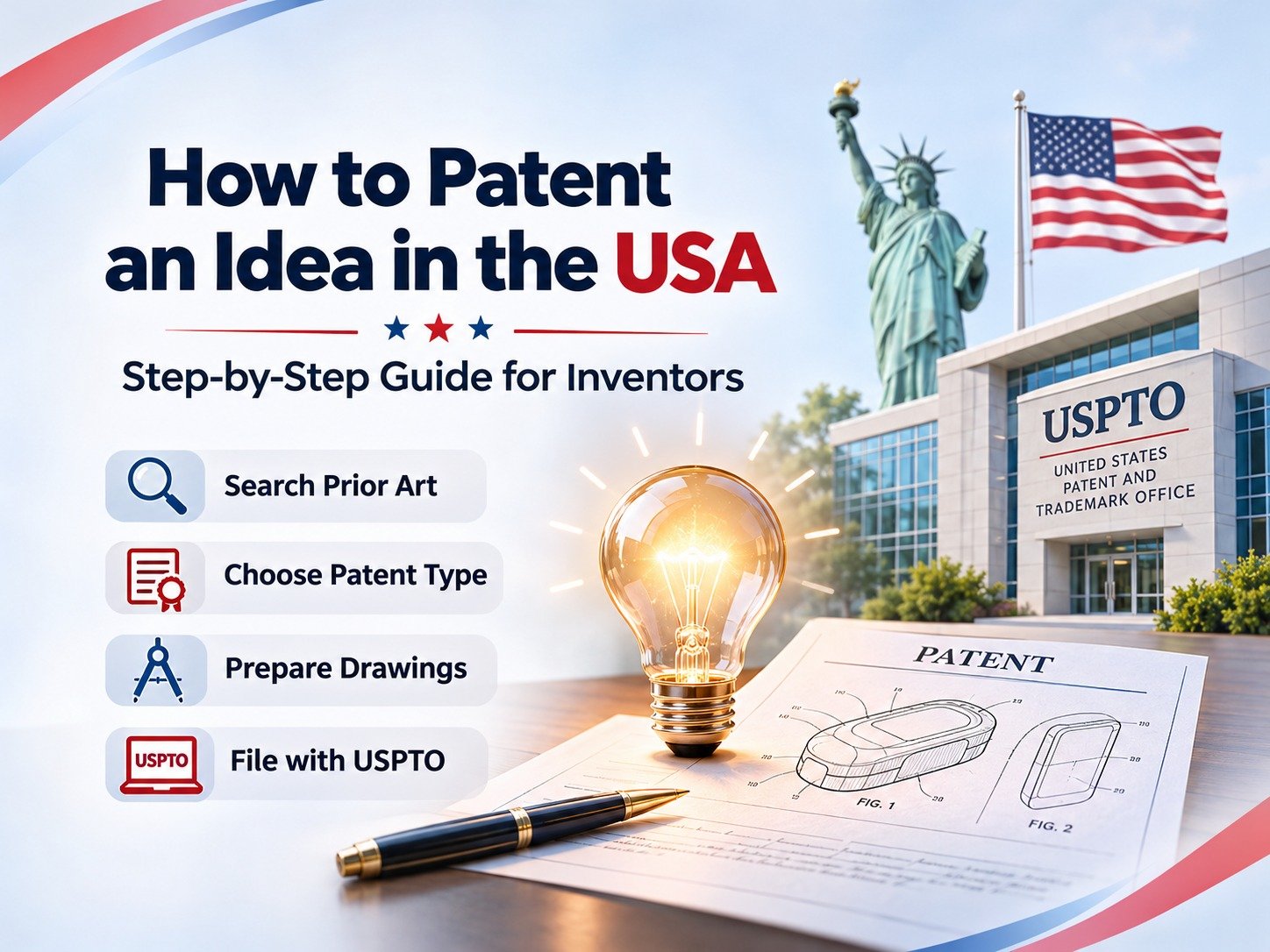
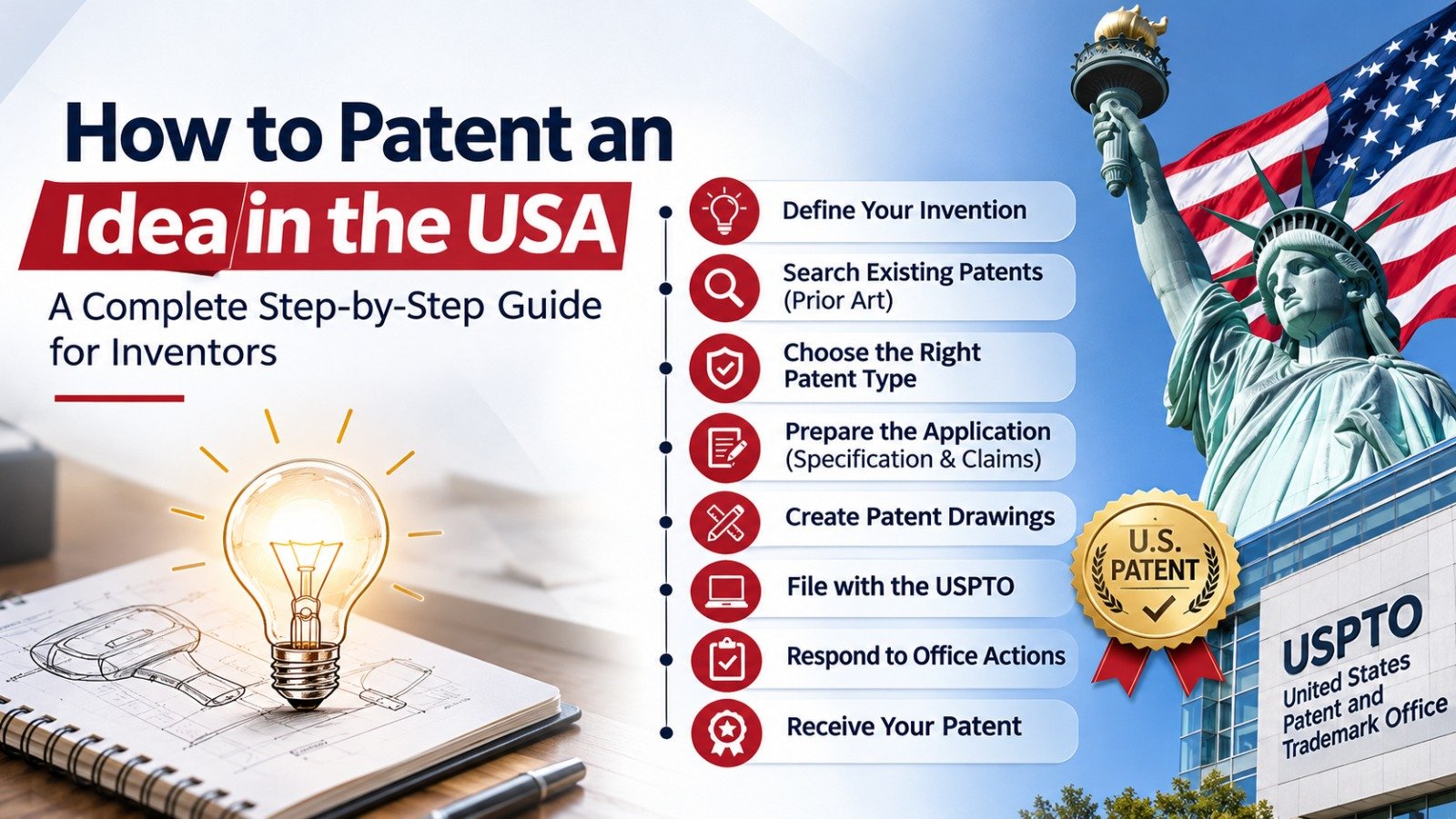
Indeed, the American patent procedure may seem confusing in the beginning due to the necessity to conduct a patent search, deal with prior art, file a provisional application, draft claims and drawings, submit the necessary documents to the USPTO, and pass an examination of your patent application by a patent examiner.
Nevertheless, things get simpler once you divide the process into logical steps.
The crucial point is that you cannot secure any fuzzy idea as such. What you need is an invention which could be described in detail.
You must be able to explain:
Typically, the process of patenting an invention takes this route:
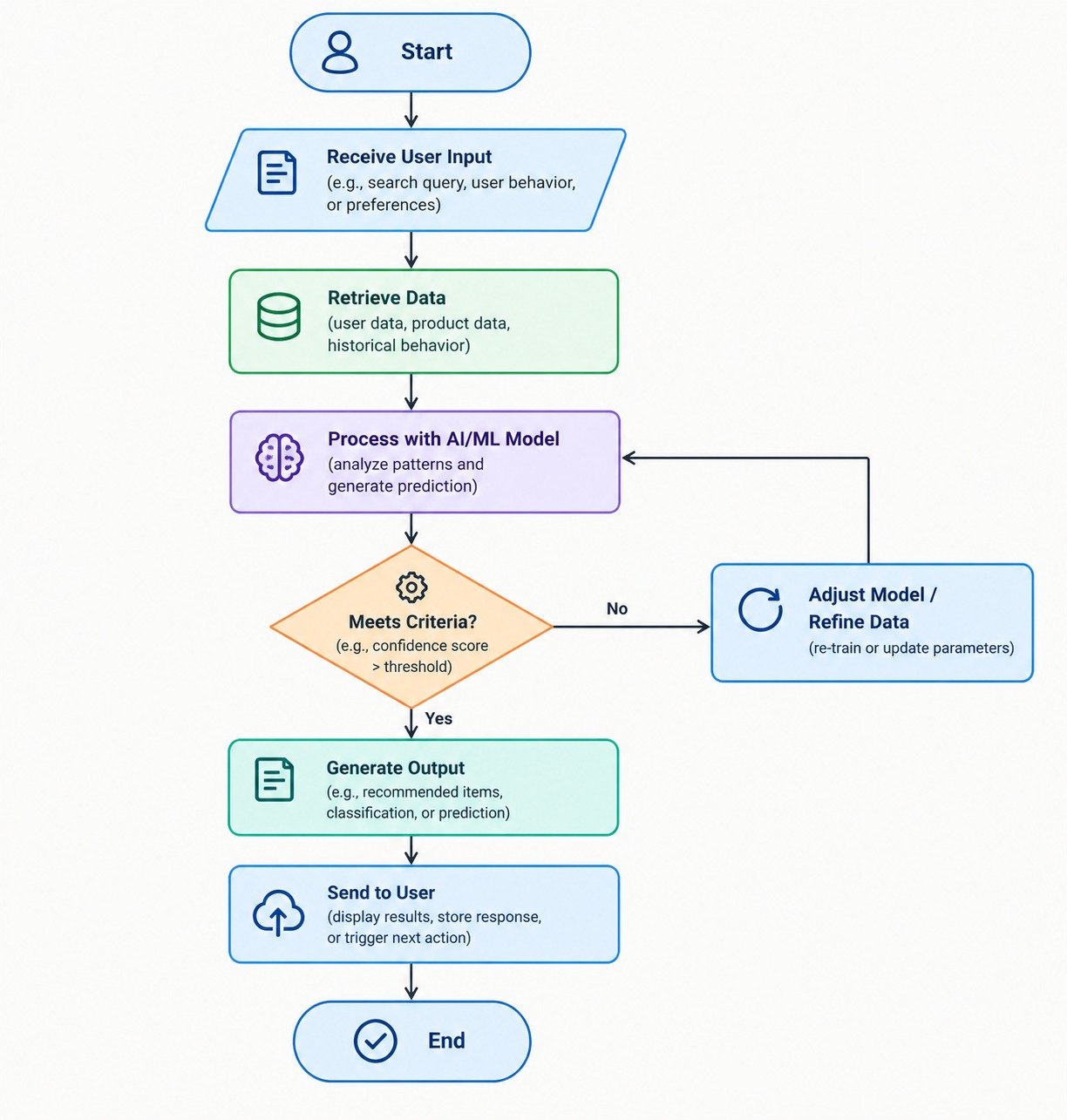
Developing the invention → Searching the patent database → Selecting the appropriate patent → Preparing the patent application → Drawing the invention for the patent → Filing the application at the USPTO → Receiving the patent after examination
Here is a basic description of the steps.
Steps to obtain patent rights for an invention in the U.S. will normally involve:
The exact steps involved may vary based on the invention and type of patent application prepared.
This is one of the most common questions inventors ask.
The phrase “patent an idea” is widely used, but technically, a patent application needs more than a general concept.
For example, saying:
“I want to create a smarter locking system.”
is not enough by itself.
A stronger invention description would explain:
You do not necessarily need a finished commercial product before filing, but the invention should be developed enough to be described properly.
Before patent search and preparation of documents, describe the invention in detail.
Begin with an explanatory description in clear language.
The following questions can be asked:
For example, rather than stating:
"I have invented a smart bottle."
It can be described as:
"A drinking receptacle which has a temperature sensor and automated valve system controlling flow of the liquid based on temperature."
This will provide a solid base for further patent searching and drawing process.
When your idea is fleshed out, write down all of its functionality.
Documents that may be used include:
If your invention is mechanical, show the way the parts fit together.
If your invention is software, describe:
Documentation will make it easy for you to create a good patent application.
Before you invest a lot of money in your patent application, make sure there is no similar technology out there already.
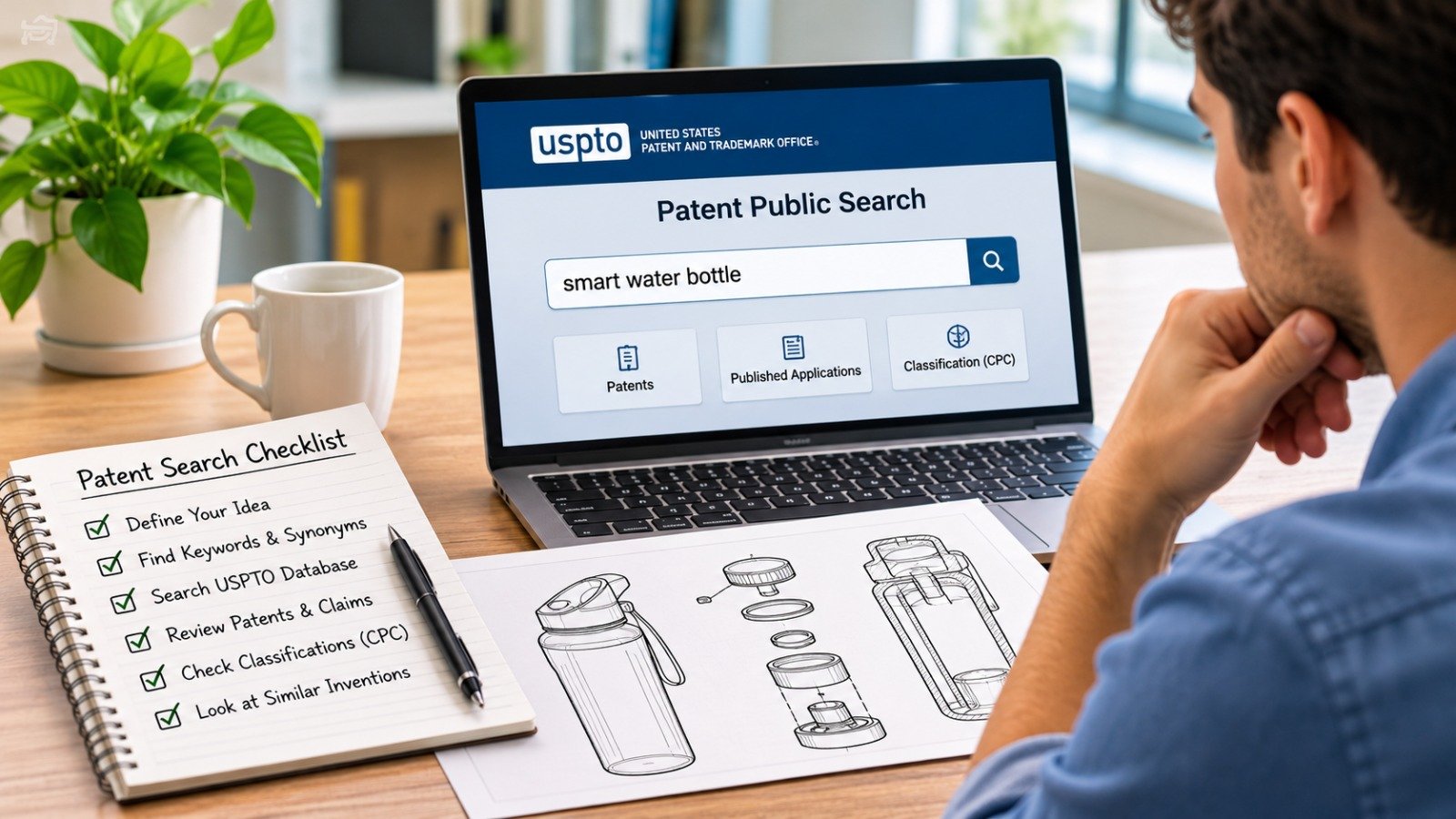
This process is known as patent searching or prior art search.
You must search for:
The first place to look is the USPTO Patent Public Search Database.
Another good resource is Google Patents.
Let us assume that you have invented an automatic bicycle locking device.
DO NOT search for:
"automatic bicycle lock"
Try also searching with:
As patent literature uses technical terminology, it is necessary to vary keywords.
Prior art can be defined as any previous publicly available information which might be useful in determining the novelty of an invention.
This can include:
Even if there is some prior art, this doesn’t necessarily mean that your invention can't be patented.
The more important thing to consider is:
What makes your invention unique?
Even though an invention may prove useful, there may be various legal conditions that must be met in order to obtain a patent for it.
Some common considerations examined by patent examiners include:
One reason for conducting a prior-art search before filing is to gain an idea of how congested the technical area is, as well as the aspects that make it unique.
There are three basic kinds of patents in the USA.
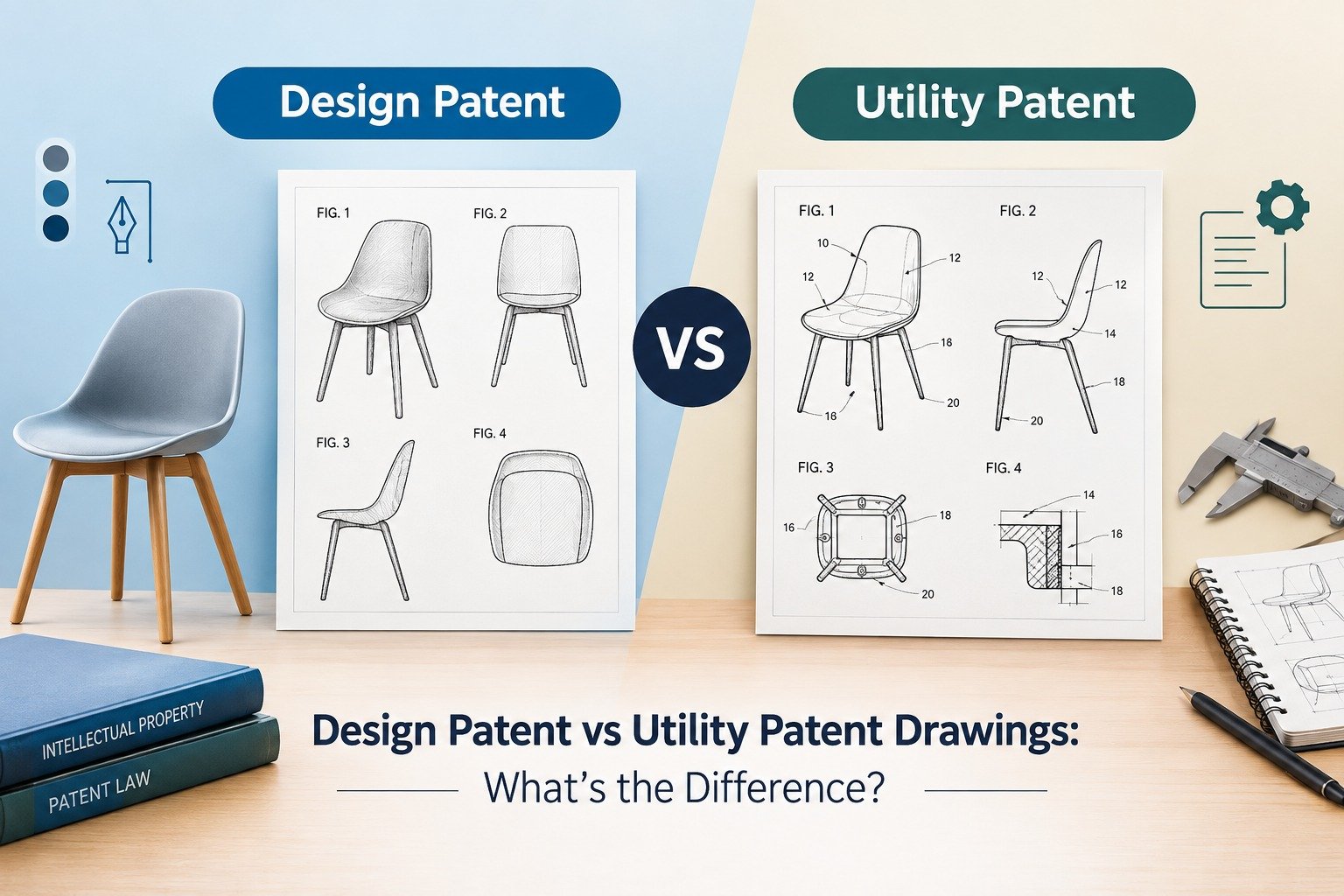
A utility patent generally protects how an invention works.
A design patent protects the ornamental appearance of an article.
It focuses on how the product looks rather than how it works.
A plant patent applies to certain new and distinct plant varieties.
For most inventors working with products, devices, systems, or processes, a utility patent is usually the most relevant type.
A provisional patent application can be useful when an inventor wants to secure an early filing date before filing a full nonprovisional application.
A provisional application generally:
Must be followed by a corresponding nonprovisional application if you want to continue pursuing patent protection
Inventors often use provisional applications when they are still:
However, a provisional application should still contain enough detail to support the invention properly.
A weak provisional application can create problems later if important details were never included.
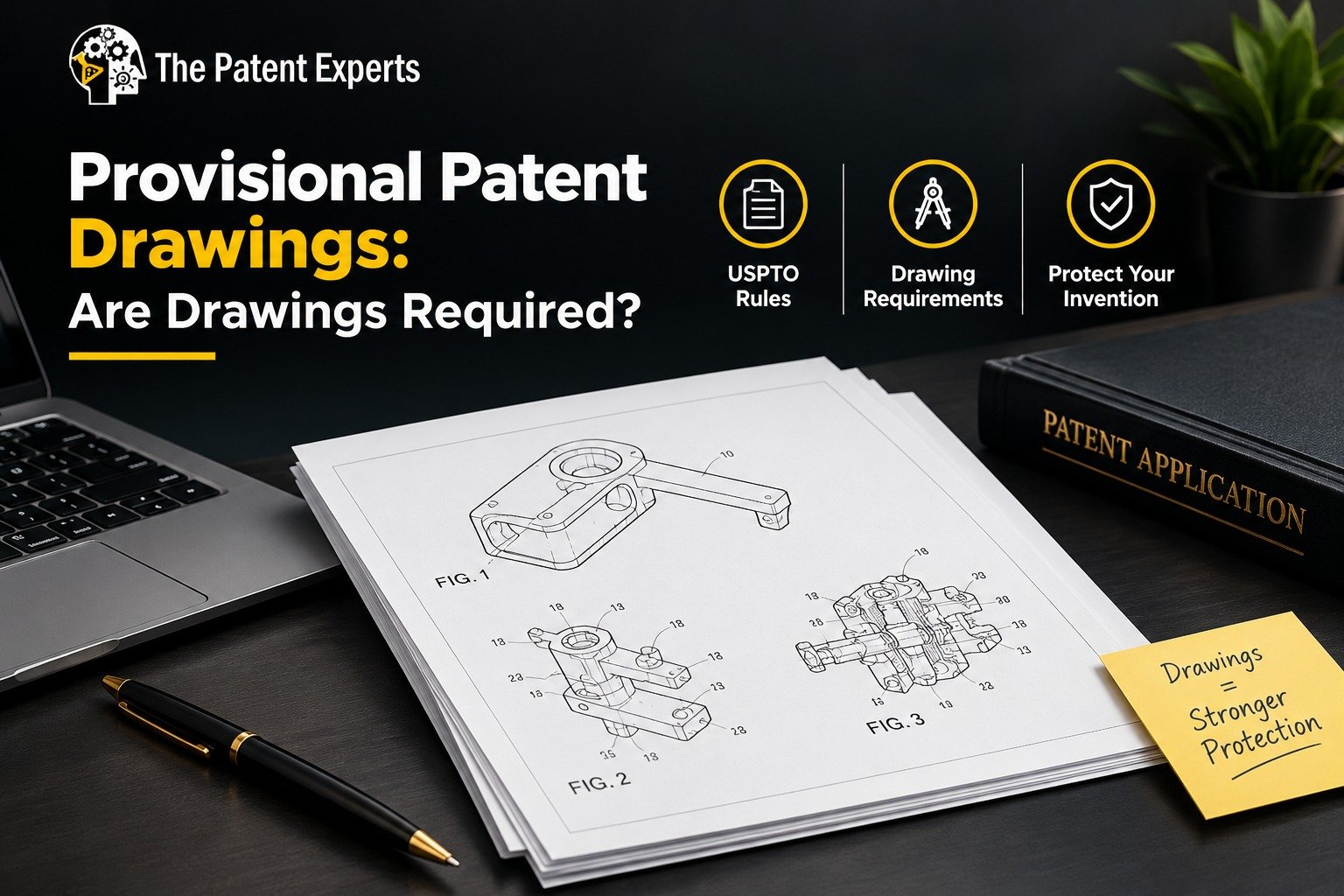
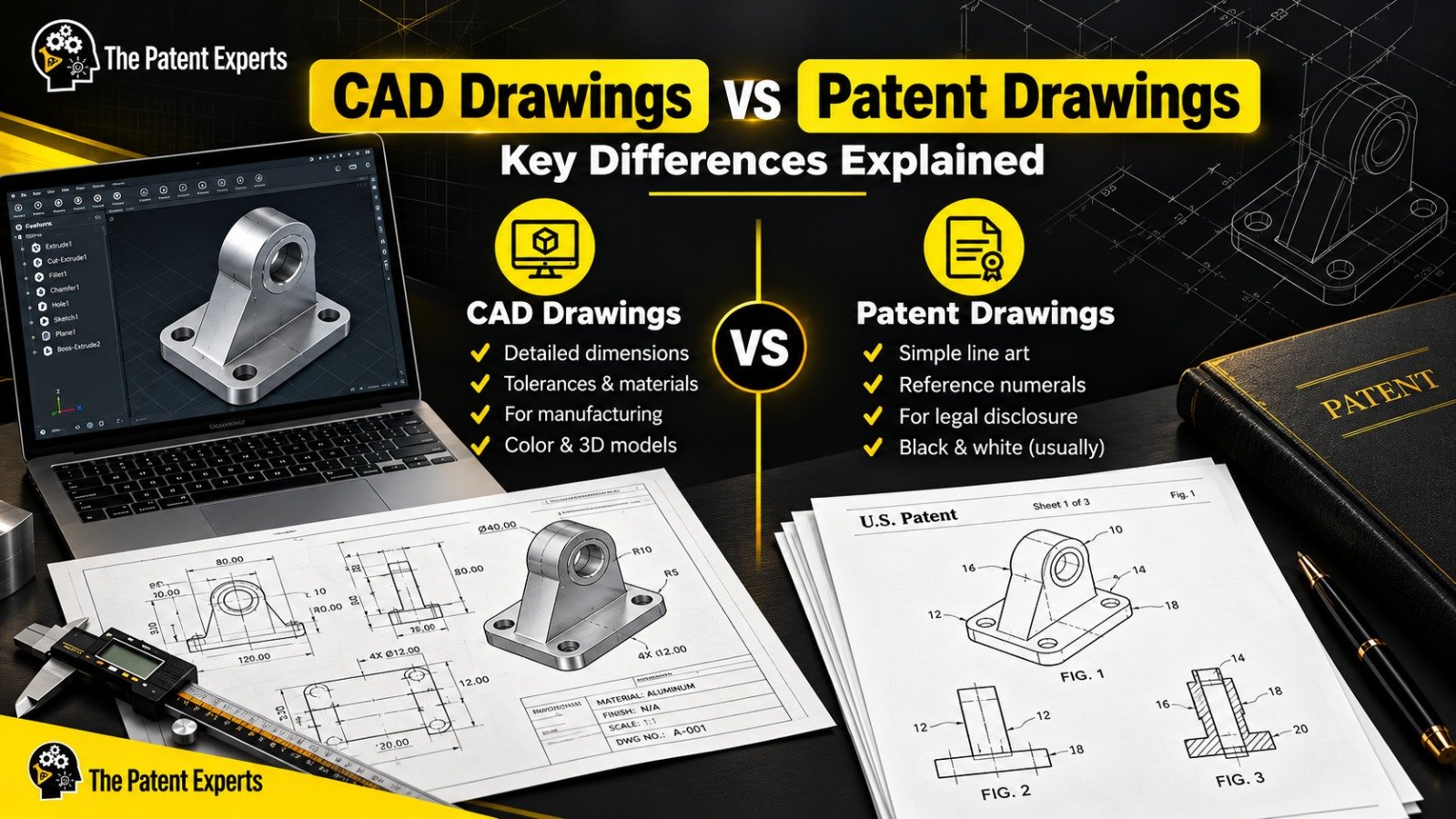
Patent drawings can be extremely important, especially for mechanical and product-based inventions.
They help explain:
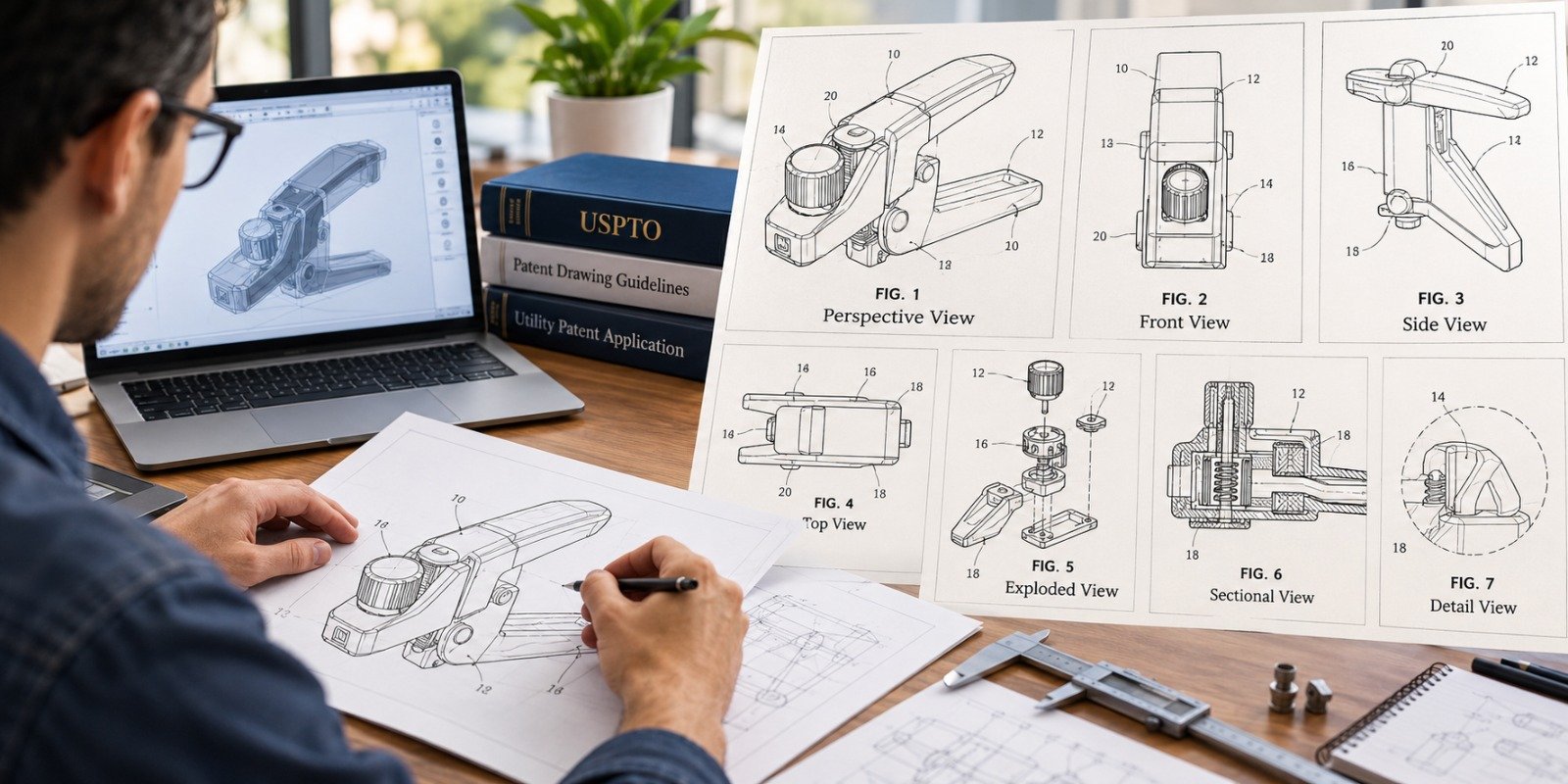
Depending on the invention, useful patent drawing views may include:
Patent drawings are not simply product illustrations.
They should clearly support the technical disclosure and follow applicable USPTO drawing requirements.
For many inventions, professional drawings can make the application easier to understand.
The specification is the written explanation of your invention.
It typically includes:
The drawings and written description should support each other.
For example:
FIG. 1 may show a perspective view.
FIG. 2 may show an exploded view.
FIG. 3 may show a sectional view.
The written description should then explain what each figure shows.
Patent claims define what protection you are asking for.
They are one of the most important parts of a utility patent application.
Claims may include:
An independent claim usually defines a broader combination.
A dependent claim adds more specific limitations.
Because claim drafting can affect the scope of the resulting patent, many inventors choose to work with a registered patent attorney or patent agent.
Patent applications are filed with the United States Patent and Trademark Office.
Electronic filing is handled through the USPTO Patent Center.
Depending on the type of application, you may need:
Applicants should always check current USPTO requirements before filing because forms, fees, and procedures can change.
There is no single fixed cost.
The total cost can depend on:
USPTO fees may also vary depending on whether the applicant qualifies as a:
For this reason, it is better to think of patent cost as a process rather than one single filing fee.
Once a nonprovisional patent application is filed, it eventually goes to a patent examiner.
The examiner reviews the application and may evaluate:
The examiner may then send an official communication known as an Office Action.
Receiving an Office Action does not automatically mean your patent application is rejected permanently.
Office Actions may include:
You may need to respond by:
It is important to respond within the required deadline.
However, if the examiner is convinced that the content of the application consists of allowable subject matter and everything else is met, the application might then become eligible for allowance.
Upon completing the fees and formalities, the USPTO can grant the patent.
Then, the inventor becomes entitled to the rights conferred by the patent..
Patent approval is not usually a quick process.
The total timeline depends on:
Some applications move faster than others.
In many cases, utility patent prosecution can take years.
That is why inventors should avoid assuming a patent will be granted within a few months.
Not always.
You may be able to file a patent application without building a physical prototype if the invention is developed enough to be clearly described.
You may use:
The important issue is whether the invention can be properly explained.
Yes, sometimes.
Inventions may often be refinements on existing technologies.
Some examples are:
While the overall product may already exist, the invention itself may still be patentable.
A prior art search will help reveal the distinctions.
Software patents can be more complicated.
You usually cannot rely on the idea of an app alone.
The patentability analysis may depend on:
If your invention involves software, AI, algorithms, or computer systems, professional patent advice can be especially useful.
Public disclosure can affect patent rights.
Examples may include:
U.S. patent law may provide a limited grace period in certain situations, but foreign patent rights may be affected differently.
Because of this, filing before public disclosure is often the safer strategy.
Yes, one can apply for a patent without an attorney.
These people are commonly referred to as pro se applicants.
But patent writing may be hard because of the two factors involved.
The professional help may be useful in:
Never file prematurely until the invention is fully conceived.
You could waste your money on something that is already patented extensively.
Google is helpful; however, you should not rely only on it.
Even when filing a provisional application, some degree of technical disclosure must be provided.
The invention can become hard to understand due to faulty drawings.
Non-conformity with deadlines may have adverse consequences for the application.
Confusing “Patent Pending” with “Patent Awarded”
“Patent pending” merely implies filing of an application.
Disclosure before patenting creates patent problems.
Prior to filing, ensure that you have:
A strong patent application often depends on clear technical communication.
At The Patent Experts, we help inventors and patent professionals prepare professional patent drawings from:
Depending on the invention, drawing services may include:
Clear patent illustrations can make a complex invention much easier to understand.
Patenting an idea in the USA is not simply a matter of submitting a form.
It is a process that starts with developing the invention properly.
Patent strategy is often expected to include the following:
Being well-prepared before filing allows proceeding easily through the patenting process.
Develop the invention, perform a prior art search, select a type of patent, prepare the specification and claims, make patent drawings (if necessary), and file the application at USPTO.
Yes, in most cases, a working model is not needed for obtaining a patent. The invention should be sufficiently developed to be able to describe it.
Depends on USPTO fees, patent type, complexity, legal help fees, patent searching fees, patent drawings, responses to office actions, and others.
Depending on the particular circumstances, a patenting process might take from several months to years.
If necessary, patent drawings must be made, particularly for mechanical, structural, and product inventions.
Yes. It will help you to know about similar inventions and to figure out what makes your invention new and patentable.
Yes, for eligible inventions. A provisional patent application may give an inventor an early filing date and is typically followed by a non-provisional application within 12 months.
No. A provisional application is not examined, and it does not automatically convert into a patent.
In some cases, yes. If a new and non-obvious improvement was added to an existing product, it can be patented.
It generally means that the patent application is pending (has been submitted to USPTO) but has not led to a patent yet.
Yes, it is. Inventors are allowed to file their applications themselves. Professional assistance with patent application preparation might be useful, though.
In the USA, U.S. patent applications are filed with the United States Patent and Trademark Office using USPTO Patent Center.

At “The Patent Experts” our team specialises in turning complex concept and ideas into exact complaint patent drawings that meet the stringent guidelines of USPTO, EPO, WIPO among other major patent offices around the globe. With over 5+ years of experience, our team of skilled illustrators are efficient in producing high quality utility designs and trademark patent drawings. By combining cutting-edge technology with a deep understanding of global patent regulations, we ensure every drawing we create is ready for seamless submission and approval.
Quicks Links
Get in touch
Our phone number
Our email address
© 2026 The Patent Expert's All Rights Reserve
Made with ♥ by Website99